
How to Find Government Jobs in South Africa: 10 Ways to Find and Apply
How to find government jobs in South Africa is to search official sources such as the Department of Public Service and Administration (DPSA) Public Service Vacancy Circular, the South African Government jobs portal, individual department websites and official provincial recruitment portals. Once you find a suitable vacancy, read the advert carefully, check that you meet the requirements and follow the exact application method stated in the advert.
The South African Government jobs portal is one of the best places to start because it brings together vacancies advertised across national and provincial government. The Public Service Vacancy Circular is generally published weekly, except during December. (Government of South Africa)
You should never pay someone to get access to a government vacancy or guarantee you a government job. Finding an advert is only the beginning—you still need to qualify for the position and submit the application correctly.
This guide explains where to look, how to read government vacancy adverts, how the Z83 works, what mistakes to avoid and how to improve the quality of your applications.

Table of Contents
1. Start With the DPSA Public Service Vacancy Circular
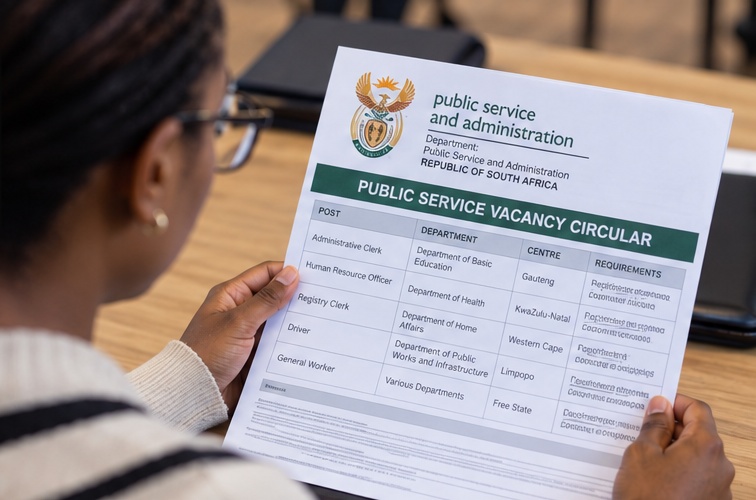
If you’re trying to understand how to find government jobs in South Africa, learn how to use the Public Service Vacancy Circular.
The circular is issued by the Department of Public Service and Administration (DPSA) and contains vacancies from national departments and provincial administrations.
The DPSA states that the circular is normally published weekly except during December. It also makes clear that individual departments—not the DPSA itself—are responsible for the content of their vacancy advertisements. (DPSA)
You can access the current and previous circulars through the:
DPSA Public Service Vacancy Circular page
At the time this article was checked, the DPSA newsroom listed Circular 32 of 2026 as the newest circular. (DPSA)
How to use the circular
Don’t simply open the PDF and scroll through hundreds of pages.
Look for the relevant:
- national department;
- province;
- occupation;
- salary level;
- location;
- reference number.
If you’re reading the PDF on a laptop, use your browser or PDF reader’s Find function.
Search terms could include:
ADMINISTRATION CLERK
GENERAL WORKER
GAUTENG
HUMAN RESOURCES
DRIVER
SECURITY OFFICER
FINANCE
This can save considerable time.
2. Use the South African Government Jobs Portal
Another important official source is the South African Government website.
South African Government — Government Jobs
The government explains that jobs are advertised on national department websites and in the Public Service Vacancy Circular. It also points job seekers to government vacancies published through other official channels. (Government of South Africa)
There is also a useful page specifically for the current week’s vacancies:
Instead of relying entirely on Facebook groups, WhatsApp messages or third-party job websites, make official government sources part of your routine.
Third-party websites can help you discover opportunities, but verify the vacancy on an official source before sending personal information or documents.
3. Check Individual Government Department Websites
Not every job search has to begin with the vacancy circular.
Government departments can also maintain vacancy pages on their own websites. The official government jobs guidance confirms that vacancies are advertised on national department websites as well as through the Public Service Vacancy Circular. (Government of South Africa)
For example, if you’re specifically interested in employment with the Department of Employment and Labour, you can check its official vacancies page.
Department of Employment and Labour Vacancies
Current listings demonstrate why checking department websites can be useful: the Department’s vacancy page currently includes positions with September 2026 closing dates. (Department of Labour)
Other departments may use different recruitment systems.
The important lesson is:
Don’t assume every government job is advertised and applied for in exactly the same way.
Read the specific vacancy.
4. Check Your Provincial Government Recruitment Portal
If you want to work for a provincial government, search the official recruitment channels for your province.
Provincial vacancies can include opportunities in areas such as:
- health;
- education;
- agriculture;
- roads and transport;
- social development;
- treasury;
- human settlements;
- administration.
For example, Gauteng operates the:
Gauteng Professional Job Centre
The portal allows applicants to search vacancies and view details such as the department, position and closing date. (GPG Professional Job Centre)
The DPSA vacancy circular also groups provincial opportunities by province. Recent circulars have included vacancies across provinces such as Gauteng, KwaZulu-Natal, Limpopo, Mpumalanga, Northern Cape, Free State and Western Cape, although the provinces represented can vary from one circular to another. (Government of South Africa)
Search according to where you can realistically work
If you’re based in Gauteng but willing to relocate to KwaZulu-Natal, you can search both.
If relocation isn’t realistic, concentrate on vacancies in areas you can actually reach.
A government position isn’t automatically suitable simply because you meet the academic requirements.
Consider:
- location;
- transport;
- working hours;
- relocation costs;
- salary;
- contract type.
5. Read the Government Job Advert Before Applying
Finding a vacancy isn’t the same as qualifying for it.
Read the entire advertisement.
Government vacancy adverts commonly provide information such as:
- post title;
- salary;
- centre/location;
- requirements;
- duties;
- competencies;
- reference number;
- contact person;
- application instructions;
- closing date.
Don’t look only at the job title.
For example, two positions called Administration Clerk may have different requirements, locations and duties.
Create a quick checklist:
| Requirement | Do I meet it? |
|---|---|
| Required qualification | Yes/No |
| Experience | Yes/No |
| Driver’s licence | Yes/No |
| Required skills | Yes/No |
| Location suitable | Yes/No |
| Documents ready | Yes/No |
| Closing date still open | Yes/No |
If the advert requires something you don’t have, don’t falsely add it to your CV.
If you’re struggling because most positions require experience, read our JobMarketSA guide on how to get a job with no experience in South Africa and focus on vacancies appropriate to your experience level.
6. Understand the Z83 Application Form
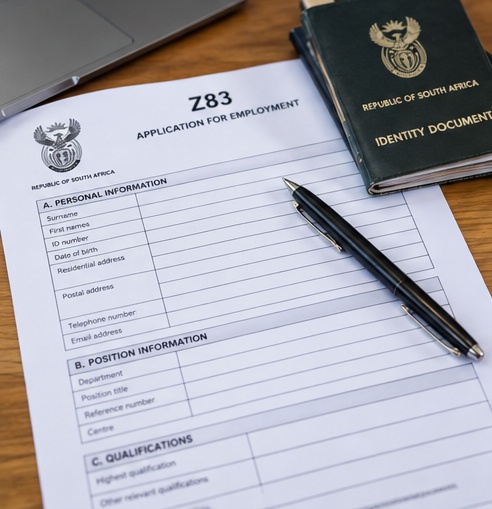
One of the most important parts of learning how to find government jobs in South Africa is understanding that finding the vacancy and applying correctly are two different things.
For Public Service positions that require it, you’ll need the Z83 Application for Employment form.
The government’s public-service employment guidance tells applicants to download and complete Form Z83, attach a CV and submit the required application to the address provided in the advertisement. It also warns applicants to read the individual advert because departments may request additional documents. (Government of South Africa)
You can access the official application information through:
Employment in the Public Service — South African Government
Current DPSA vacancy circular instructions specify the new Z83 form effective from 1 January 2021 and require applicants to indicate the vacancy’s reference number. (DPSA)
Don’t reuse an outdated Z83 blindly
If you downloaded a Z83 years ago, verify that you’re using the current version.
Don’t assume every application uses the same submission method
One department may ask you to:
- email the application;
- use an e-recruitment system;
- deliver it;
- post it;
- submit through another specified channel.
Follow the instructions in the actual advert.
7. Complete the Z83 Carefully
A rushed application can create avoidable problems.
Before submitting, check:
Vacancy reference number
The DPSA instructions require applicants to indicate the reference number of the vacancy. (DPSA)
Don’t assume the job title alone is enough.
Personal information
Make sure your:
- name;
- contact number;
- email address;
- other requested details
are accurate.
A wrong phone number can make it impossible for an employer to contact you.
Position details
Make sure the application corresponds with the actual vacancy you’re applying for.
Declaration and required fields
Read every section instead of skipping boxes because they don’t look important.
If something is unclear, check the official instructions or contact the department using the details provided in the vacancy.
8. Tailor Your CV to the Government Position
Don’t automatically send the same generic CV to every vacancy.
Suppose a government Administration Clerk vacancy emphasises:
- records management;
- data capturing;
- customer service;
- Microsoft Office;
- filing.
And your CV prominently discusses:
- merchandising;
- photography;
- sales;
- social media.
Even if you possess administrative skills, the employer may have difficulty identifying them.
Instead, bring genuinely relevant abilities forward.
For example:
KEY SKILLS
- Microsoft Word
- Microsoft Excel
- Data capturing
- Record keeping
- Customer service
- Filing
- Written communication
- Attention to detail
Only include skills you genuinely possess.
Our JobMarketSA article on what skills should I put on my CV explains how to identify skills from an advertisement and match them with your real abilities.
If the entire document needs work, use our guide on how to write a CV for a job in South Africa.
9. Search for Government Jobs With No Experience Carefully
Government doesn’t have one universal experience requirement.
Some posts require substantial professional experience.
Others may have lower entry requirements.
Your job is to read the requirements of each vacancy.
For example, government recruitment can cover very different occupations:
- cleaners;
- clerks;
- nurses;
- engineers;
- accountants;
- security officers;
- managers;
- drivers;
- legal professionals;
- administrative staff;
- technical specialists.
These positions obviously don’t have identical requirements.
Current Department of Employment and Labour listings illustrate that government recruitment can span occupations from Security Officer and Registry Clerk to accounting and HR positions. (Department of Labour)
Don’t assume “entry level” means “anyone can apply”
A position might not require work experience but could still require:
- Matric;
- a diploma;
- professional registration;
- driver’s licence;
- specific technical knowledge.
Apply according to the advertised requirements.
10. Check for New Government Vacancies Regularly
Government recruitment changes constantly.
A vacancy you see today can close before you return to it weeks later.
Because the Public Service Vacancy Circular is normally issued weekly except during December, create a routine. (DPSA)
For example:
Friday: Check the latest DPSA circular.
Saturday: Shortlist positions.
Sunday: Read requirements and prepare applications.
Monday: Submit suitable applications well before closing dates.
You don’t have to follow those exact days.
The important part is having a system.
Bookmark:
DPSA Newsroom and Vacancy Circulars
and
Then check them regularly.
How to Search the DPSA Vacancy Circular Faster
The circular can be long.
Instead of manually reading every page, use keywords.
On a computer, open the PDF and use:
Ctrl + F on many Windows computers
or
Command + F on a Mac.
Search for:
ADMINISTRATION
or:
GAUTENG
or:
DRIVER
Then move through the matches.
Search several variations
If you’re looking for administrative work, try:
- administration;
- administrative;
- clerk;
- registry;
- secretary.
Don’t search only one phrase and conclude there are no relevant positions.
Government Jobs With Only Matric
A common question is whether you can find government work with Matric.
The answer depends entirely on the vacancy.
Some government posts may accept a Senior Certificate or equivalent as part of their requirements, while professional or specialised positions can require diplomas, degrees, professional registration or experience.
Don’t search:
“Government jobs with Matric”
and apply to everything you see.
Instead:
- Open the current circular.
- Search relevant entry-level job titles.
- Read each advert.
- Check the qualification requirements.
- Apply only where you qualify.
This is more reliable than trusting social-media posts claiming:
“GOVERNMENT HIRING 10,000 PEOPLE — MATRIC ONLY!”
Verify the actual advert.
Can You Apply for Government Jobs Online?
Sometimes.
But there isn’t one application method for every government vacancy.
Some departments and provinces use online recruitment systems. Others may specify email or another submission method.
For example, Gauteng has its own Professional Job Centre for vacancies. (GPG Professional Job Centre)
For Public Service applications generally, the official government guidance says applicants should submit the completed Z83 and required documents to the address specified in the vacancy. (Government of South Africa)
Therefore:
Always follow the submission method stated in the specific advertisement.
Don’t email an application simply because you emailed a different department last month.
Do You Need Certified Documents When Applying?
Don’t assume.
Read the advertisement.
Government’s public-service employment guidance says departments may ask applicants for certified copies of educational qualifications, identity documents or other personal documents and specifically instructs applicants to check the advert for what must be attached. (Government of South Africa)
That distinction matters.
Application-document requirements can change or differ between departments and stages of recruitment.
Use the vacancy itself as your primary instruction.
What Happens After You Apply?
Submitting an application doesn’t mean you’ll automatically receive a response or interview.
Government vacancies can attract multiple applicants.
Departments then conduct their recruitment and selection processes according to the applicable requirements.
The government’s public-service employment page says the length of the recruitment and selection process varies among departments. (Government of South Africa)
Keep applying
Don’t submit one application and stop your job search for two months while waiting.
Continue looking for suitable opportunities.
Keep records
Use a simple spreadsheet:
| Date | Department | Position | Reference | Closing Date | Status |
|—|—|—|—|—|
| 8 Sep | Department A | Admin Clerk | REF123 | 18 Sep | Applied |
| 9 Sep | Department B | Registry Clerk | REF456 | 20 Sep | Preparing |
This becomes especially useful when you receive a phone call weeks later.
You’ll immediately know which vacancy they’re discussing.
How to Prepare for a Government Job Interview

If you’re shortlisted, return to the original vacancy advertisement.
Study:
- duties;
- required knowledge;
- competencies;
- department;
- role;
- relevant legislation or policies where appropriate.
Then research the department through its official website.
Prepare examples showing how your actual experience relates to the position.
For common interview questions, JobMarketSA has guides covering:
- how to answer “Tell me about yourself” in an interview;
- what are your strengths and weaknesses in an interview;
- how to answer “Why should we hire you?”
Don’t memorise answers word for word.
Understand your examples and explain them naturally.
7 Government Job Application Mistakes to Avoid
1. Applying after the closing date
Check the deadline before spending time preparing the application.
2. Using the wrong reference number
Copy it carefully from the vacancy.
3. Ignoring the requirements
Don’t apply simply because you like the salary.
4. Sending an incomplete application
Follow the advert’s instructions.
5. Using an outdated process
Check current official guidance rather than relying on instructions someone gave you years ago.
6. Lying on your CV or Z83
Don’t invent qualifications, experience, licences or skills.
7. Trusting unverified social-media adverts
Verify vacancies through official sources.
How to Avoid Fake Government Job Adverts
Job scams can imitate government recruitment.
A Facebook post might use:
- the South African flag;
- a government logo;
- photographs of officials;
- government-looking colours.
That doesn’t make it genuine.
Before applying:
Check the official website
Search for the vacancy through the DPSA circular, government website, provincial portal or department website.
Check the reference number
Compare it with the official advertisement.
Check the closing date
Scammers sometimes recycle old vacancies.
Be suspicious of guaranteed placement
Nobody should promise that paying them will secure a government job.
Don’t send sensitive information unnecessarily
Verify who you’re dealing with before sharing documents.
A Weekly Government Job Search Routine
Here’s a practical system.
Step 1: Check the latest circular
Open the DPSA vacancy page.
Step 2: Search your province
Find opportunities you can realistically access.
Step 3: Search your occupation
Use several related keywords.
Step 4: Create a shortlist
Don’t apply immediately.
First check whether you qualify.
Step 5: Read every shortlisted advert
Check:
- requirements;
- duties;
- location;
- reference number;
- closing date;
- application method.
Step 6: Tailor your CV
Emphasise your genuine relevant skills and experience.
Step 7: Complete the required application
Follow the advert exactly.
Step 8: Check everything
Especially:
- phone number;
- email;
- reference number;
- documents;
- submission details.
Step 9: Submit early
Don’t deliberately wait until the last few minutes.
Step 10: Record the application
Save the vacancy and application details.
Then repeat the process when new vacancies are published.
Frequently Asked Questions
How do I find government jobs in South Africa?
Use official sources including the DPSA Public Service Vacancy Circular, South African Government jobs portal, individual department websites and official provincial recruitment portals. The Public Service Vacancy Circular is generally published weekly except during December. (Government of South Africa)
Where are South African government jobs advertised?
National and provincial government vacancies are advertised through the Public Service Vacancy Circular, government department websites and other official government recruitment channels. (Government of South Africa)
What is the DPSA vacancy circular?
The Public Service Vacancy Circular is issued by the Department of Public Service and Administration and contains advertised vacancies from Public Service departments. It is generally issued weekly except during December. (DPSA)
Do I need a Z83 for government jobs?
Public Service positions that require a Z83 will specify the application requirements. Official public-service employment guidance instructs applicants to complete the Z83 and submit it with a CV and any other documents required by the advertisement. (Government of South Africa)
Can I get a government job with Matric?
Some vacancies may have requirements that can be met with Matric or an equivalent qualification, while others require further education, registration or experience. Check the requirements of each individual vacancy rather than assuming all government jobs have the same requirements.
Can I apply for government jobs without experience?
Some vacancies may not require previous experience, while others do. Search the current advertisements and read the requirements carefully. Don’t invent experience to qualify.
How often are government vacancies advertised?
The DPSA states that the Public Service Vacancy Circular is generally published weekly, except during December. (DPSA)
Should I pay someone to help me get a government job?
You should not pay someone who claims they can guarantee you a government position. Use official recruitment channels, verify vacancies and follow the application process stated in the advertisement.
Conclusion
Learning how to find government jobs in South Africa becomes much easier once you stop relying on random social-media vacancy posts and build your search around official sources.
Start with the DPSA Public Service Vacancy Circular and the South African Government jobs portal. Check department and provincial recruitment websites when relevant.
Then slow down before applying.
Read the requirements.
Check the closing date.
Record the reference number.
Use the correct Z83 when required.
Tailor your CV.
Follow the exact submission instructions.
And verify that the vacancy is genuine.