Which Job Pays a Lot in SA Without a Degree? 12 Careers to Consider
If you’re wondering which job pays a lot in SA without a degree, skilled trades such as electrician, millwright, diesel mechanic, boilermaker, fitter and turner, plumber and welder are some of the strongest careers to investigate. Other possibilities include mining operations, heavy-equipment work, sales and certain professional driving roles. The important catch is that no degree does not mean no training: many well-paying careers require a trade qualification, apprenticeship, licence, certificate, experience or specialised skills.
South Africa’s official 2024 National List of Occupations in High Demand supports this distinction. It includes electricians, millwrights, plumbers, welders, boilermakers, riggers, fitter and turners, diesel mechanics, heavy-equipment mechanics and mining operators. Many of these occupations list National Certificate-level qualifications rather than university degrees. (Government of South Africa)
That makes them particularly interesting if university isn’t the route you want—or isn’t financially realistic for you.
But don’t choose a career simply because somebody on TikTok says it pays R50,000 a month.
Here’s what you should know first.

Table of Contents
Can You Really Earn Good Money in South Africa Without a Degree?
Yes.
A university degree is only one route to a skilled career.
South Africa also has Technical and Vocational Education and Training (TVET), apprenticeships, learnerships, occupational qualifications, trade testing and workplace training.
The Department of Higher Education and Training’s artisan-development information describes an artisan as a skilled, formally trained and tested worker. Routes can include TVET study, learnerships, apprenticeships and—in qualifying circumstances—Artisan Recognition of Prior Learning. (NADS-C)
This matters because there is a huge difference between:
“I don’t have a university degree.”
and:
“I don’t want to learn any specialised skill.”
The first person can still have many options.
The second will generally find it much harder to command higher pay.
Your earning potential usually improves when you can do something an employer genuinely needs and can’t easily replace.
With that in mind, here are 12 careers worth researching.
1. Electrician

Electrician is one of the first trades I’d investigate if your goal is to build a skilled career without completing a university degree.
Electricians can work across homes, commercial properties, construction sites, factories and other industrial environments.
Depending on their training and position, their work can involve installing, testing, maintaining and repairing electrical systems and equipment.
This isn’t a career where watching a few YouTube videos makes you qualified to work unsupervised on electrical systems.
Proper training matters.
South Africa’s 2024 occupations-in-demand list includes Electrician, with a National Certificate at NQF Level 4 listed as the minimum qualification in that document. (Government of South Africa)
Why can electricians earn well?
You’re being paid for a specialised technical skill.
Experience can also open opportunities in more demanding industrial environments.
The long-term potential doesn’t necessarily stop at being someone’s employee. Depending on your qualifications, legal requirements and experience, a skilled tradesperson may eventually explore self-employment or running a trade business.
But first, focus on becoming properly trained and competent.
2. Millwright
If you’ve never heard of a millwright, don’t skip this career just because the title isn’t familiar.
Millwrights work with machinery and typically need a mixture of mechanical and electrical knowledge.
That combination can make the skill useful in industrial environments where production equipment needs to operate reliably.
The government’s 2024 high-demand occupations list includes Millwright, again showing a National Certificate at NQF Level 4 as the listed minimum qualification. (Government of South Africa)
Who should consider becoming a millwright?
It may suit you if you enjoy:
- working with machinery;
- understanding how equipment operates;
- practical problem-solving;
- electrical and mechanical systems;
- technical work rather than sitting behind a desk all day.
Don’t choose it only because you heard it pays well.
You need to be comfortable developing genuine technical ability.
3. Diesel Mechanic
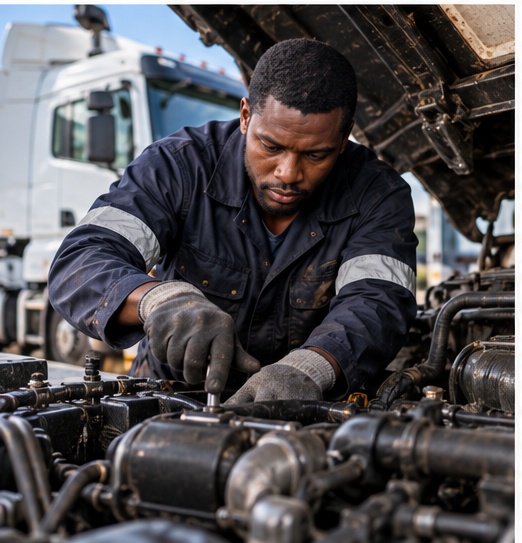
South Africa moves enormous amounts of goods and people by road, while mining, construction, agriculture and other industries depend on heavy machinery.
That creates a need for people who can maintain and repair diesel-powered vehicles and equipment.
A diesel mechanic may work on equipment such as trucks, buses and other diesel machinery, depending on the employer.
Diesel Mechanic appears on the government’s occupations-in-demand list with National Certificate NQF Level 4 as the listed minimum qualification. (Government of South Africa)
Government’s artisan guidance also identifies diesel mechanics among the country’s in-demand trades. (Government of South Africa)
Why is it worth considering?
A broken piece of essential equipment can cost a company money while it sits unused.
The ability to diagnose and repair machinery therefore has real commercial value.
As you become more experienced, the complexity of the equipment you can work on may also increase.
4. Boilermaker
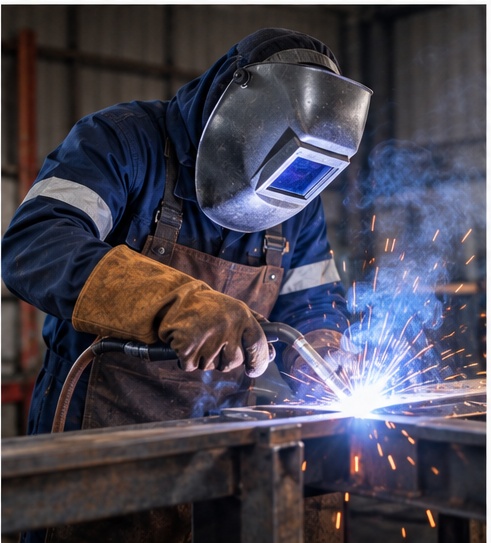
Boilermaking is another career that frequently comes up when South Africans discuss skilled trades.
Boilermakers can work in fabrication, manufacturing, engineering, construction, mining and related industrial environments.
The work can involve fabricating, assembling and repairing metal structures and components.
It is skilled physical work.
South Africa’s official high-demand occupations list includes Boiler Maker, with National Certificate NQF Level 4 as its listed minimum qualification. (Government of South Africa)
Government artisan guidance also identifies boilermaking among the country’s in-demand artisan trades. (Government of South Africa)
Is boilermaking easy?
No.
“Doesn’t require a university degree” should never be confused with “easy.”
You may be working with tools, measurements, drawings, metal and industrial equipment where mistakes matter.
The reason skilled trades can command better pay is partly because becoming competent takes actual training and experience.
5. Fitter and Turner
A fitter and turner works with machinery and mechanical components.
Depending on the workplace, the job can involve manufacturing, fitting, maintaining or repairing components and equipment.
The occupation is particularly relevant to industrial and manufacturing environments.
Fitter and Turner appears on the official occupations-in-demand list with National Certificate NQF Level 4 as the minimum qualification listed. (Government of South Africa)
Why consider this route?
It’s another example of a career where practical technical ability can matter more than having a traditional bachelor’s degree.
If you’re mechanically minded and interested in manufacturing or machinery, it’s worth investigating alongside millwright and mechanical fitter careers.
6. Plumber
Everybody notices plumbing when it stops working.
Homes, businesses, construction projects and other facilities need functioning water and drainage systems.
Qualified plumbers can therefore develop a practical skill that has applications across different environments.
Plumber appears on South Africa’s 2024 occupations-in-demand list with National Certificate NQF Level 4 as the listed minimum qualification. (Government of South Africa)
Plumbing is also included in government’s list of in-demand artisan trades. (Government of South Africa)
Employment isn’t the only possible long-term route
A skilled plumber may start as an employee and, after gaining appropriate experience and meeting relevant requirements, eventually investigate working independently.
That’s one of the attractive things about certain trades.
You’re developing a skill that can potentially be sold directly to customers as well as employers.
But don’t rush the process.
Get properly trained first.
7. Welder
Welding is used across manufacturing, construction, fabrication, maintenance and engineering.
A welder joins and repairs metal components using specialised processes and equipment.
Not every welding job pays the same.
A beginner performing relatively straightforward work and a highly experienced welder doing specialised industrial work shouldn’t be expected to earn identical amounts.
That principle applies throughout this article.
The government’s 2024 occupations-in-demand list includes Welder, with National Certificate NQF Level 4 listed as the minimum qualification. (Government of South Africa)
Government artisan guidance also lists welding among in-demand trades. (Government of South Africa)
What can improve your prospects?
Developing competence.
Not just collecting certificates.
An employer needs someone who can safely and consistently perform the required work.
The more specialised the work becomes, the more important your actual skill and experience can become.
8. Rigger
Riggers are particularly relevant in environments where heavy equipment and loads need to be moved or positioned safely.
That can include construction, engineering, industrial projects and mining-related environments.
The work carries responsibility.
You don’t want someone guessing when heavy equipment is being lifted around people.
South Africa’s occupations-in-demand list includes Rigger, with National Certificate NQF Level 4 listed as the minimum qualification. (Government of South Africa)
Government artisan guidance also includes riggers among in-demand trades. (Government of South Africa)
Why can specialised industrial skills pay more?
Because the employer isn’t simply paying for your time.
They’re paying for your ability to perform a technical task correctly and safely.
Training, competence and experience therefore matter.
9. Heavy Equipment Mechanic
Think beyond ordinary passenger cars.
Construction, mining and other heavy industries use expensive equipment that needs maintenance and repairs.
That’s where heavy-equipment mechanics can come in.
South Africa’s occupations-in-demand list includes Heavy Equipment Mechanic, with National Certificate NQF Level 4 as the listed minimum qualification. (Government of South Africa)
This could be worth investigating if you’re interested in mechanics but would prefer working with large industrial equipment rather than standard passenger vehicles.
Where could the work take you?
Potential environments can include:
- mining;
- construction;
- equipment maintenance;
- industrial operations;
- heavy machinery companies.
Individual vacancies will have their own requirements, so always read the job advertisement rather than assuming one qualification automatically makes you eligible for every position.
10. Mining Operator
Mining remains an important part of South Africa’s economy, and not every occupation at a mine requires a university degree.
The 2024 occupations-in-demand list includes Mining Operator, for which the Gazette lists an Intermediate Certificate at NQF Level 3 as the minimum qualification. (Government of South Africa)
That’s notable because it’s below degree level.
However, don’t read that and assume you can simply arrive at a mine tomorrow and become an operator.
Employers can impose additional requirements involving:
- training;
- licences or competency certificates;
- medical fitness;
- safety requirements;
- previous experience;
- specific machinery.
Does mining automatically mean a huge salary?
No.
Mining includes many different occupations, employers, locations and working conditions.
Some positions can pay well, especially as skills, responsibilities and experience increase, but avoid choosing mining based purely on screenshots of someone’s payslip online.
Research the exact occupation.
11. Professional Driver
Driving can become a career rather than simply a way to travel from A to B.
Depending on your licence, Professional Driving Permit (PrDP), experience and employer requirements, opportunities can exist in:
- deliveries;
- logistics;
- distribution;
- passenger transport;
- truck driving;
- company driving;
- specialised transport.
A university degree generally isn’t the central qualification for professional driving.
Your driving licence, PrDP where required, driving record, experience and ability to perform the job safely are far more relevant.
Can professional drivers earn a lot?
Some driving positions can pay better than others, particularly where the vehicle, route, working hours or responsibilities are more demanding.
But don’t assume having a licence automatically guarantees a high salary.
A newly licensed driver and a highly experienced heavy-vehicle driver performing specialised work are very different candidates.
If you already have the appropriate licence, read our JobMarketSA guide on how to get a job with Code 10 and PDP for a more detailed job-search strategy.
12. Sales Representative
Sales is different from most careers on this list because there isn’t one universal technical qualification that defines every salesperson.
A sales representative helps a business generate revenue by selling products or services.
Depending on the company, compensation can involve:
- a basic salary;
- commission;
- performance incentives;
- or a combination.
Strong performers in certain sales environments can potentially earn significantly more than their basic salary.
But commission works both ways.
If your earnings depend heavily on sales performance and you don’t make sales, your income may disappoint you.
Who might be good at sales?
You may have an advantage if you can:
- communicate confidently;
- listen carefully;
- understand customer needs;
- explain products clearly;
- handle rejection;
- follow up consistently;
- work towards targets.
Retail and customer-service experience can sometimes provide useful transferable skills.
Again, investigate the specific employer and compensation structure before accepting a position.
Which of These Jobs Pays the Most?
There is no responsible way to name one occupation from this list and promise it will always pay the most.
Your salary can depend on:
Experience. A qualified artisan with ten years of experience may earn very differently from someone completing an apprenticeship.
Industry. An occupation performed in a large industrial or mining environment may have a different pay structure from the same broad trade in a small business.
Location. Demand and salaries aren’t identical across South Africa.
Employer. Two companies can pay different salaries for similar positions.
Specialisation. Specialist skills can sometimes command more money.
Overtime and allowances. Some occupations involve overtime, shifts, travel or additional allowances.
Responsibility. Supervisory and senior technical roles may pay more.
This is why I haven’t filled this article with attractive salary numbers pulled from random job websites.
Salary advertisements change constantly, and a few vacancies don’t establish what everyone in an occupation earns.
Instead, use current vacancies to investigate the market in your area.
The Big Difference: No Degree vs No Qualification
This is probably the most important part of the entire article.
You might read:
“High-paying jobs without a degree.”
And interpret it as:
“High-paying jobs that require no training.”
That’s not what this list means.
Look again at South Africa’s official occupations-in-demand list.
Electrician: National Certificate NQF Level 4.
Millwright: National Certificate NQF Level 4.
Diesel Mechanic: National Certificate NQF Level 4.
Boiler Maker: National Certificate NQF Level 4.
Plumber: National Certificate NQF Level 4.
Welder: National Certificate NQF Level 4.
Fitter and Turner: National Certificate NQF Level 4. (Government of South Africa)
These aren’t university degrees.
But they aren’t “nothing” either.
The qualification and practical training are part of what makes you valuable.
How Do I Become a Qualified Artisan in South Africa?

If trades such as electrician, millwright, plumbing or diesel mechanics interest you, understand the artisan pathway before applying for random courses.
The Department of Higher Education and Training’s National Artisan Development information explains several routes, including TVET study, learnerships, apprenticeships and Artisan Recognition of Prior Learning. (NADS-C)
TVET College
TVET stands for Technical and Vocational Education and Training.
DHET says TVET colleges offer qualifications such as National Certificate (Vocational) and NATED technical programmes linked to artisan trades. (NADS-C)
This can provide the theoretical foundation for a technical career.
Learnership
A learnership combines structured learning with workplace-based experience and leads toward a nationally recognised qualification.
For an unemployed person, finding a legitimate learnership can therefore be particularly useful because you’re not only studying—you can also gain workplace exposure.
Apprenticeship
An apprenticeship is specifically connected to learning a listed trade.
You work under qualified people while developing the theoretical and practical competence required.
DHET’s artisan portal says apprenticeships combine theory with on-the-job training and ultimately lead toward a trade test once the necessary requirements have been met. (NADS-C)
Trade Test
The trade test matters because passing it is what allows an apprentice who has completed the required pathway to qualify as an artisan.
Government describes artisan development as combining theoretical training, workplace practical training and a final trade test. (Government of South Africa)
So don’t think:
No university = no studying.
Think:
Different type of education.
What If I Can’t Afford University?
Not being able to attend university doesn’t mean you should abandon the idea of building a skilled career.
Investigate:
- public TVET colleges;
- apprenticeships;
- learnerships;
- SETA-related opportunities;
- employer training programmes;
- occupational programmes;
- bursaries and funding opportunities for which you qualify.
The key word is legitimate.
Before paying a private institution, check whether the programme and provider are appropriately recognised for the qualification you’re pursuing.
A fancy certificate that employers don’t recognise won’t help simply because somebody called it “international.”
What If I Only Have Matric?
Matric can be enough to start investigating several non-degree routes.
But entry requirements vary by programme.
Some technical pathways may require particular subjects or achievement levels. Others can have different entry requirements.
DHET’s artisan-development portal says one apprenticeship route may start from Grade 9 or an appropriate N2 Certificate, although the exact requirements depend on the trade and programme. (NADS-C)
Therefore, don’t reject yourself before checking.
Find the specific programme.
Read its requirements.
Then determine whether you qualify.
What If I Don’t Have Matric?
Your options become narrower, but you shouldn’t automatically assume there are no paths forward.
Some vocational programmes have entry requirements below Matric.
For example, the artisan-development information referenced above describes Grade 9 as one possible minimum point for apprenticeship pathways, depending on the trade and programme. (NADS-C)
That doesn’t mean every apprenticeship accepts Grade 9.
Always check the actual programme.
If you left school early, you can also investigate whether completing or improving your schooling would make sense for your long-term career goal.
Don’t choose a five-year career direction based purely on what you qualify for today.
Ask what you could qualify for after another year of preparation.
Can I Earn More Than a University Graduate Without a Degree?
Potentially.
But that’s the wrong comparison to build your career around.
Some artisans earn more than some graduates.
Some graduates earn more than some artisans.
Some business owners earn more than both.
Some struggle.
Your income isn’t determined solely by whether the word degree appears on your CV.
Occupation, experience, scarcity of skills, industry, responsibility, performance, location and employer can all matter.
A better question is:
Which career gives me a realistic path to becoming highly skilled at something employers need?
That’s much more useful than trying to beat an imaginary graduate’s salary.
Which Career Should You Choose?
Don’t choose all 12.
Choose two or three to research properly.
For example, if you’re mechanically minded, compare:
- diesel mechanic;
- millwright;
- fitter and turner;
- heavy-equipment mechanic.
If you prefer construction and practical service work, compare:
- electrician;
- plumber;
- welder.
If you already have the correct driving licence, investigate professional driving.
If you’re highly confident communicating with people and working toward targets, investigate sales.
Then compare each career using five questions:
1. What training do I need?
Find the exact qualification or licence.
2. How long will it take?
Some career paths take years.
That’s not automatically a bad thing.
3. Where will I get practical experience?
Training without workplace experience can leave you struggling to compete.
4. Are employers actually looking for this skill?
South Africa’s official occupations-in-demand information is a useful starting point because its purpose is to help inform skills planning and identify labour-market demand. (DHET)
5. Can I see myself doing this for years?
Don’t become a boilermaker because you saw one salary screenshot if you hate industrial environments.
Don’t become a salesperson because someone promised unlimited commission if you hate selling.
Money matters.
So does whether you’re capable of sticking with the career long enough to become good at it.
How to Start From Zero
Suppose you’re reading this with Matric, no degree and no specialised qualification.
Here’s a practical route.
Step 1: Pick one career
Let’s say electrician.
Not electrician + truck driver + plumber + programmer + forex trader.
One target.
Step 2: Research the official training pathway
Find out which recognised qualifications and practical requirements lead toward becoming a qualified electrician.
Use government, DHET, TVET and relevant SETA information rather than depending solely on social-media advice.
Step 3: Find legitimate training opportunities
Investigate public TVET colleges, learnerships, apprenticeships and employer programmes.
Step 4: Build workplace experience
This is where an apprenticeship or work-based programme can become valuable.
Technical careers aren’t learned only from a textbook.
Step 5: Complete the required assessments
For listed artisan trades, this can ultimately include the trade-test process.
Step 6: Get qualified
Now you’re no longer simply:
“Someone without a degree.”
You’re a person with a recognised skill.
That’s the goal.
Avoid Fake Learnerships and Training Programmes
Job seekers aren’t the only people scammers target.
Young people looking for learnerships and training can also be targeted.
Be careful if somebody promises:
Guaranteed qualification.
Guaranteed job.
Guaranteed huge salary.
Pay immediately to secure your government learnership.
Verify the organisation independently.
Don’t use only the WhatsApp number on the advertisement.
If a programme claims to be connected to a government department, SETA, TVET college or major company, visit that organisation’s official website independently and check whether the opportunity exists.
The desire to improve your future shouldn’t make you easier to scam.
Frequently Asked Questions
Which job pays a lot in SA without a degree?
Skilled trades such as electrician, millwright, diesel mechanic, boilermaker, fitter and turner, plumber and welder are strong careers to investigate. Mining operations, specialised driving, heavy-equipment mechanics and some sales roles can also offer good earning potential. Pay varies significantly by experience, employer, industry and specialisation.
What is the highest-paying job without a degree in South Africa?
There isn’t one reliable occupation that can be declared the highest-paying non-degree job for everyone. Seniority, specialisation, industry, overtime, location and employer can change earnings substantially. Focus on occupations where you can develop scarce or technically valuable skills.
Can I become an electrician without a university degree?
Yes. Electrician is an artisan trade rather than a career that necessarily requires a university degree. South Africa’s 2024 occupations-in-demand list gives National Certificate NQF Level 4 as the listed minimum qualification for Electrician. (Government of South Africa)
Can I become a plumber without a degree?
Yes. Plumbing is another artisan route. The 2024 national high-demand list includes Plumber and lists National Certificate NQF Level 4 as its minimum qualification. (Government of South Africa)
Can I become a diesel mechanic without university?
Yes. Diesel Mechanic is included in the official occupations-in-demand list and government artisan guidance. You’ll still need the appropriate vocational training and practical route rather than simply applying without relevant skills. (Government of South Africa)
Are there high-paying jobs without Matric?
There can be careers and training routes that don’t require Matric, but your options are generally more limited. Entry requirements vary. Some artisan apprenticeship pathways can start below Matric level depending on the programme and trade, so investigate official requirements rather than assuming. (NADS-C)
Is TVET better than university?
Neither is automatically better.
They serve different career goals.
If you want to become a qualified artisan, vocational training and workplace learning may be more directly relevant than pursuing an unrelated bachelor’s degree.
If you want to enter a profession that legally or practically requires university education, university may be necessary.
Choose education based on the career—not prestige.
Which trades are in demand in South Africa?
Government artisan guidance identifies trades including diesel mechanics, instrument technicians, riggers, auto-electricians, millwrights, boilermakers, welders, electricians, plumbers, fitter and turners, mechanical fitters, bricklayers and carpenters among in-demand artisan skills. (Government of South Africa)
Final Thoughts
So, which job pays a lot in SA without a degree?
There isn’t one magic answer.
But if earning well without university is your goal, I would seriously investigate electrician, millwright, diesel mechanic, boilermaker, fitter and turner, plumber, welder, rigger and heavy-equipment mechanic before chasing supposed “easy high-paying jobs.”
Many of these occupations are backed by South Africa’s official occupations-in-demand information. (Government of South Africa)
More importantly, they teach an important lesson:
You don’t necessarily need a degree to become valuable in the labour market. But you do need a valuable skill.
Instead of spending the next three years searching for a high-paying job that requires no qualifications, consider spending that time becoming qualified at something businesses genuinely need.
That can change the question from:
“Who will hire me without a degree?”
to:
“Which employers need the skill I’ve built?”