
What Are Your Strengths and Weaknesses in an Interview? 10 Examples
What are your strengths and weaknesses in an interview? Your strengths should be genuine abilities that are relevant to the job and that you can support with examples, while your weaknesses should be real areas you are actively improving. A strong answer doesn’t claim you’re perfect: it shows the interviewer that you understand what you do well, recognise where you can improve and can explain both honestly.
For example, you might say:
Strength: “One of my strengths is attention to detail. In my previous role, I regularly checked stock records and investigated discrepancies before reporting them.”
Weakness: “One area I’ve been improving is public speaking. I’m comfortable speaking one-on-one, but larger groups used to make me nervous. I’ve been working on this by volunteering to contribute more during team discussions.”
The important part isn’t finding a “perfect” strength or a clever weakness. It’s choosing answers that are truthful, relevant and supported by evidence.
This guide explains how South African job seekers can answer strengths-and-weaknesses questions, with examples for people with experience, first-time job seekers, graduates and candidates applying for retail, administrative, customer-service and other roles.

Table of Contents
Why Do Interviewers Ask About Your Strengths and Weaknesses?
Interviewers aren’t necessarily expecting you to reveal something dramatic.
Questions about strengths help them understand:
- what you believe you do well;
- whether those abilities match the position;
- whether you can provide evidence;
- how well you understand your own capabilities.
Questions about weaknesses can help them assess:
- your self-awareness;
- honesty;
- willingness to learn;
- ability to accept development areas;
- whether a weakness creates a serious problem for the particular position.
The key is self-awareness.
Someone who says:
“I don’t have any weaknesses.”
may unintentionally make the question harder for themselves.
Everyone has areas they can improve.
Likewise, simply saying:
“I’m hardworking.”
doesn’t tell an interviewer much unless you explain what that looks like in practice.
What Are Your Strengths and Weaknesses in an Interview? Use This Formula

When answering what are your strengths and weaknesses in an interview, don’t simply provide two lists.
Use evidence for your strength and improvement for your weakness.
For strengths
Use:
Strength → Example → Relevance
For example:
“One of my strengths is customer communication. In my previous retail position, I assisted customers with product enquiries and helped resolve straightforward complaints. I think that experience would be useful in this role because it involves dealing directly with customers.”
For weaknesses
Use:
Weakness → Impact → Improvement
For example:
“One area I’ve been working on is speaking in front of groups. I used to become nervous when presenting to several people at once. I’ve been improving by contributing more during team discussions and preparing my main points beforehand.”
These formulas prevent your answers from becoming empty claims.
10 Strengths and Weaknesses Interview Examples
There isn’t one correct answer for every candidate.
Your answer should depend on the position and your actual experience.
Here are ten examples you can adapt.
1. Strength: Communication
Communication can be a useful strength for jobs involving:
- customers;
- colleagues;
- suppliers;
- telephone enquiries;
- sales;
- administration;
- teamwork.
Example answer
“One of my strengths is communication. In my previous position, I dealt with customers throughout the day and had to explain information clearly, listen to their concerns and escalate issues when necessary. That experience taught me how important it is to communicate calmly and professionally.”
This is stronger than:
“I’m a good communicator.”
because you’ve provided context.
If you’re preparing for customer-facing positions, this is also something that should appear naturally when deciding what skills to put on your CV.
2. Strength: Attention to Detail
Attention to detail can be especially valuable in:
- administration;
- finance;
- stock control;
- data capturing;
- quality control;
- healthcare administration;
- warehousing.
Example answer
“Attention to detail is one of my strengths. In my previous role, I had to check stock quantities and expiry dates carefully. Small mistakes could create bigger problems later, so I developed a habit of checking important information before completing a task.”
Again, the example makes the strength believable.
3. Strength: Problem-Solving
Don’t claim:
“I can solve any problem.”
Instead, explain the type of problems you’ve handled.
Example answer
“Problem-solving is one of my strengths. When I encounter an issue, I first try to understand what’s causing it before deciding what action to take. For example, when we identified stock discrepancies, I would check the available records and physical stock before escalating unresolved differences.”
This demonstrates a process rather than just using a buzzword.
4. Strength: Teamwork
Most workplaces require employees to work with other people.
Example answer
“One of my strengths is teamwork. I’m comfortable completing my own responsibilities, but I also understand that the department’s results depend on people communicating and supporting each other. In my previous role, we regularly coordinated tasks to make sure daily work was completed on time.”
Don’t say you’re a team player simply because employers like the phrase.
Use it only when you can explain how you’ve worked with others.
5. Strength: Organisation
Organisation can be valuable for positions involving multiple tasks, records or deadlines.
Example answer
“Organisation is one of my strengths. I like to prioritise tasks according to urgency and keep track of what still needs to be completed. This helped me manage routine responsibilities while dealing with unexpected customer or operational issues.”
If possible, replace general statements with examples from your own experience.
6. Weakness: Public Speaking
Public speaking can be a reasonable weakness when speaking to large groups isn’t an essential daily requirement of the job.
Example answer
“Public speaking has been an area I’ve needed to improve. I’m comfortable communicating one-on-one, but I used to become nervous when speaking in front of larger groups. I’ve been working on it by contributing more during meetings and preparing what I want to say beforehand.”
Notice the structure:
real weakness → context → improvement
But be careful.
If you’re applying for a professional public-speaking position, saying public speaking is a major weakness could directly conflict with the job’s core requirements.
7. Weakness: Asking for Help Too Late
This can be appropriate if it’s genuinely true.
Example answer
“Earlier in my career, I sometimes spent too long trying to solve a problem independently before asking for help. I’ve learned that there are situations where asking the right person sooner saves time. I now give myself a reasonable amount of time to investigate an issue and then escalate it when necessary.”
This answer demonstrates learning.
8. Weakness: Taking on Too Much
Be specific.
Don’t use it as a disguised way of saying:
“My weakness is that I work too hard.”
Example answer
“I’ve sometimes taken on too many tasks because I wanted to help wherever possible. That occasionally made prioritisation more difficult. I’ve been improving by checking deadlines first and being more realistic about what I can complete properly within the available time.”
This sounds more genuine than pretending excessive dedication is your only flaw.
9. Weakness: Limited Experience With Specific Software
This can work particularly well when the software isn’t an essential requirement that you falsely claimed to possess.
Example answer
“I haven’t had much practical experience with Power BI yet. Most of my reporting experience has been in Excel. I’ve started learning the basics through online tutorials because I know Power BI is increasingly useful for reporting and data visualisation.”
This is honest and shows initiative.
However, don’t use this answer if the vacancy explicitly requires several years of advanced Power BI experience and you don’t meet that requirement.
10. Weakness: Confidence in New Environments
This can work for some entry-level candidates.
Example answer
“When I enter a completely new environment, I can initially be quieter while I’m learning how things work. Once I understand the team and responsibilities, I become much more comfortable contributing. I’ve been working on this by introducing myself early and asking relevant questions rather than waiting for people to approach me.”
The important distinction is that you’re explaining how you manage the weakness.
How to Choose the Best Strength for an Interview
Start with the vacancy.
Imagine you’re applying for an administrative position requiring:
- Excel;
- customer communication;
- data capturing;
- organisation;
- attention to detail.
Your genuine strengths are:
- customer service;
- attention to detail;
- teamwork;
- stock control;
- Microsoft Word.
Attention to detail would probably be more strategically relevant than stock control.
Now imagine you’re applying for a stock-controller vacancy.
Suddenly, stock control may be the stronger answer.
Your strengths don’t necessarily change.
Which strength you emphasise changes according to the position.
The South African Government’s interview guidance recommends researching the employer and considering why your skills and qualifications are relevant before attending the interview.
You can review the official guidance through the South African Government’s Preparing for an Interview guide.
How to Find Your Strengths If You Don’t Know Them
Some candidates struggle with this question because they’ve never deliberately identified their strengths.
Try this exercise.
Write down three things:
1. What responsibilities have people trusted you with?
For example:
- handling money;
- training colleagues;
- checking important documents;
- dealing with customers;
- managing stock;
- preparing reports.
2. What do people regularly ask you to help with?
Maybe you’re the person colleagues ask when they need help using Excel.
That’s evidence worth considering.
3. What tasks have you consistently performed well?
Look at your:
- previous jobs;
- education;
- volunteering;
- projects;
- internships;
- informal work.
You may discover strengths that you haven’t previously labelled as skills.
How to Answer Strengths With No Work Experience
You don’t need formal employment to have strengths.
Look at:
- school projects;
- university assignments;
- sports;
- volunteering;
- community activities;
- informal work;
- personal projects.
Suppose you recently completed Matric.
You might say:
“One of my strengths is organisation. During Matric, I had to manage deadlines across several subjects and prepare for exams at the same time. I learned to plan my study schedule and prioritise work according to deadlines.”
That’s legitimate evidence.
You don’t need to pretend you developed the skill in an office.
If you’re looking for your first opportunity, your overall application should also reflect this honestly. Our guide on how to get a job with no experience in South Africa can help you identify ways to build and present relevant experience.
How to Choose a Good Weakness
Choosing a weakness requires more care.
A useful interview weakness is generally:
- real;
- specific;
- manageable;
- not dishonest;
- something you’re improving;
- not fatal to the core responsibilities of the job.
For example, imagine you’re applying to be a delivery driver.
Saying:
“I’m not very confident driving.”
would create an obvious concern.
Likewise, if you’re applying for a data-capturing position, saying:
“I make lots of mistakes when entering information.”
directly conflicts with an important part of the job.
Choose something genuine without selecting a weakness that makes you fundamentally unsuitable for the vacancy.
Weaknesses You Should Be Careful About Using
“I’m a perfectionist”
This answer is extremely common.
It can also sound rehearsed.
If perfectionism genuinely creates a problem for you, explain the actual behaviour.
For example:
“I sometimes spend longer than necessary checking low-risk work. I’ve been learning to distinguish between tasks that require detailed checking and tasks where working efficiently is more important.”
That’s more believable.
“I work too hard”
Usually avoid this.
It often sounds like you’re trying to disguise a strength as a weakness.
“I care too much”
Same problem.
It can sound evasive.
“I have no weaknesses”
Avoid this too.
The purpose of the question is partly to assess self-awareness.
“I’m always late”
Reliability matters in most workplaces.
Unless there’s a very specific context, volunteering chronic lateness as your weakness can create unnecessary concerns.
“I don’t work well with people”
If teamwork is central to the vacancy, this could seriously undermine your application.
Should You Say Your Weakness Is Something You’re Still Learning?
Sometimes.
Suppose you’re applying for an entry-level administrative role and have basic Excel knowledge.
You might say:
“I’m currently working on improving my Excel skills. I’m comfortable with basic spreadsheets and data entry, but I don’t yet consider myself advanced. I’ve been practising formulas and other functions so I can become more confident.”
This is much better than claiming advanced Excel knowledge and hoping the employer never tests you.
However, check the vacancy carefully.
If advanced Excel is a mandatory requirement, admitting you lack it may confirm that you don’t meet the criteria.
Honesty is still better than misrepresentation.
Should You Give More Than One Strength?
Follow the interviewer’s wording.
If they ask:
“What is your greatest strength?”
give one strong answer.
If they ask:
“What are your strengths?”
you might discuss two or three.
Don’t list ten.
A smaller number with evidence is more convincing.
For example:
“I’d say my two strongest areas are customer communication and attention to detail. In my previous role…”
Now support them.
Should You Give More Than One Weakness?
Usually, one meaningful weakness is enough unless the interviewer specifically asks for several.
Don’t volunteer a catalogue of everything you struggle with.
Give a thoughtful answer and explain what you’re doing about it.
How Long Should Your Answer Be?
There is no universal official time limit.
For one strength or weakness, approximately 30–60 seconds can often be enough to provide:
- the answer;
- context;
- an example;
- the relevance or improvement.
Don’t turn the question into a five-minute speech.
The interviewer can ask follow-up questions.
Strengths and Weaknesses for Retail Interviews
Possible strengths include:
- customer service;
- communication;
- merchandising;
- teamwork;
- stock control;
- working under pressure;
- attention to detail.
Retail strength example
“Customer service is one of my strongest skills. I’ve worked directly with customers and learned how to listen to what they need, provide useful information and remain professional when someone is unhappy.”
A possible weakness might be:
“I used to find it difficult to ask for help when the department became very busy because I wanted to complete everything myself. I’ve learned to communicate earlier with colleagues so we can prioritise tasks together.”
Use only answers that reflect your real experience.
Strengths and Weaknesses for Administrative Interviews
Possible strengths:
- organisation;
- Excel;
- Word;
- communication;
- data capturing;
- attention to detail;
- record keeping;
- time management.
Administrative strength example
“Attention to detail is one of my strengths. When working with records, I make a habit of checking important information before finalising it because I understand that small errors can affect later processes.”
Possible weakness:
“I’ve been working on becoming more confident when presenting information to groups. I’m comfortable preparing reports and discussing them individually, but formal presentations have required more practice.”
Strengths and Weaknesses for Customer-Service Interviews
Possible strengths:
- listening;
- communication;
- patience;
- problem-solving;
- professionalism;
- conflict handling.
Customer-service strength example
“One of my strengths is staying calm when dealing with frustrated customers. I focus on understanding the actual problem first instead of reacting emotionally, and then I either resolve what I’m authorised to handle or escalate it appropriately.”
A possible weakness:
“Earlier in my customer-service experience, I sometimes took difficult customer interactions personally. I’ve learned to separate the customer’s frustration with the situation from myself and focus on finding the appropriate solution.”
Strengths and Weaknesses for Graduate Interviews
Graduates can use evidence from:
- university projects;
- internships;
- vacation work;
- research;
- volunteering;
- societies;
- part-time jobs.
Graduate example
“One of my strengths is analytical thinking. During my degree, I worked on projects that required me to evaluate information from several sources and explain my conclusions clearly.”
Possible weakness:
“Most of my experience has been academic, so I’m still developing confidence applying what I’ve learned in a full professional environment. I’ve tried to address this through practical projects and by actively looking for opportunities where I can gain workplace experience.”
This is honest without devaluing your education.
The University of Pretoria Career Services provides career-development resources that students and graduates can use when preparing for employment.
What If the Interviewer Challenges Your Answer?
Suppose you say:
“Leadership is one of my strengths.”
The interviewer asks:
“Give me an example.”
You need one.
This is why you should never choose strengths solely because they sound impressive.
Before the interview, prepare at least one example for every strength you intend to mention.
You can use a simple version of the STAR approach:
Situation: What was happening?
Task: What needed to be done?
Action: What did you do?
Result: What happened?
For example:
“During a particularly busy week, our department had several urgent tasks and fewer staff than usual. I helped organise which tasks needed to be completed first and checked with the team throughout the shift. We managed to complete the priority work before closing.”
Only use results you can truthfully support.
Match Your Strengths to Your CV
Your interview answers shouldn’t contradict your CV.
If your CV says your key skills include:
- customer service;
- stock control;
- Excel;
- leadership;
you should be prepared to discuss those skills.
Likewise, don’t suddenly claim expertise in an interview that isn’t supported anywhere by your experience.
If you’re unsure which abilities belong on your CV, read our guide on what skills should I put on my CV before your next application.
A well-written CV and well-prepared interview answers should tell the same professional story.
Research the Employer Before Choosing Your Answer
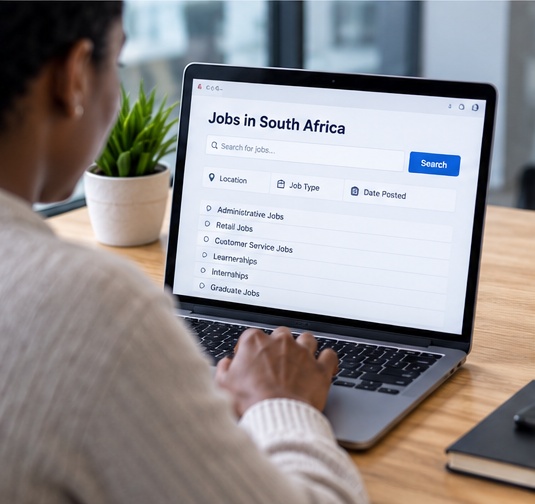
Research matters.
A strength that is valuable for one position may be less relevant for another.
Before the interview, review:
- the job description;
- employer website;
- responsibilities;
- required skills;
- qualifications;
- company values where genuinely relevant.
Then ask:
“Which of my real strengths would be most useful here?”
The South African Government’s interview preparation guidance recommends researching the company and preparing for likely interview questions before attending.
Practise Without Memorising

Write your answer in bullet points.
For example:
Strength
- attention to detail;
- stock counts;
- caught discrepancies;
- relevant to position.
Weakness
- public speaking;
- nervous with large groups;
- contribute during meetings;
- improving.
Now practise speaking from those points.
Don’t memorise a paragraph word for word.
You want your answer to sound like a conversation, not a speech.
This is the same approach you can use when preparing how to answer “Tell me about yourself” in an interview.
A Simple Strength Answer Template
Use:
“One of my strengths is [strength]. I developed this through [experience/context]. For example, [specific evidence]. I believe this would be useful in this position because [relevance].”
Example:
“One of my strengths is organisation. I developed this through my administrative experience, where I regularly had to manage records, customer enquiries and deadlines at the same time. I believe this would be useful in this position because the role requires someone who can manage several responsibilities accurately.”
A Simple Weakness Answer Template
Use:
“One area I’ve been working on is [real weakness]. I noticed that [impact/context]. To improve, I’ve started [specific action], and this has helped me [progress].”
Example:
“One area I’ve been working on is public speaking. I noticed that I became nervous when speaking to larger groups even though I was comfortable one-on-one. I’ve started contributing more during meetings and preparing my points beforehand, which has helped me become more confident.”
Don’t copy the wording if it isn’t true for you.
Use the structure.
How to Prepare Your Answer in 5 Minutes
Before your interview:
Minute 1: Read the vacancy
Identify the three most important skills.
Minute 2: Choose your strongest match
Select a genuine strength that matters for the position.
Minute 3: Find evidence
Think of one real example demonstrating the strength.
Minute 4: Choose a manageable weakness
Select a genuine development area that doesn’t destroy your suitability for the role.
Minute 5: Explain your improvement
Identify what you’re actively doing to improve it.
Now say both answers aloud.
That’s enough to create a strong starting point.
Frequently Asked Questions
What are good strengths to say in an interview?
Good strengths depend on the vacancy and your genuine abilities. Common examples include communication, problem-solving, teamwork, attention to detail, organisation, customer service and technical skills. Choose strengths you can support with real examples.
What is the best weakness to say in an interview?
There isn’t one universally “best” weakness. Choose a genuine development area that you’re actively improving and that doesn’t directly make you incapable of performing the core responsibilities of the position.
Is “perfectionist” a good weakness?
It can be genuine, but it’s extremely common and can sound rehearsed. If perfectionism actually affects your work, explain the specific behaviour and what you’re doing to manage it rather than simply using the word.
Can I say overthinking is my weakness?
You can if it’s genuinely true, but explain what you mean. Describe how it affects your work and the practical steps you’re taking to make decisions more efficiently.
Can I say I’m shy in an interview?
You can discuss confidence in certain situations if it’s genuine, but explain how you’re improving. Consider whether the weakness conflicts directly with the job’s essential responsibilities.
How many strengths should I give?
If asked for one, give one. If asked for multiple strengths, two or three relevant examples are generally more useful than a long list with no evidence.
Should I lie about my weakness?
No. Interview questions can lead to follow-up questions, and dishonest answers can create credibility problems. Choose something truthful that you can discuss professionally.
What if I have no work experience?
Use examples from school, university, volunteering, personal projects, informal work or extracurricular activities. You can demonstrate strengths without having held a formal job.
Conclusion
When deciding what are your strengths and weaknesses in an interview, don’t search for answers that you think every employer wants to hear.
Choose answers that are true.
For your strength, remember:
Strength → Example → Relevance
For your weakness:
Weakness → Impact → Improvement
Research the vacancy, identify which of your genuine strengths matters most, prepare evidence and choose a weakness you’re actively working to improve.
Then practise explaining both naturally rather than memorising a script.
Once you’ve prepared this question, your next step should be to prepare how to answer “Why should we hire you?” and how to answer “Tell me about yourself” in an interview, because those questions often require you to discuss many of the same skills and experiences.