
What Are the Best Job Search Websites in South Africa? 10 Top Sites
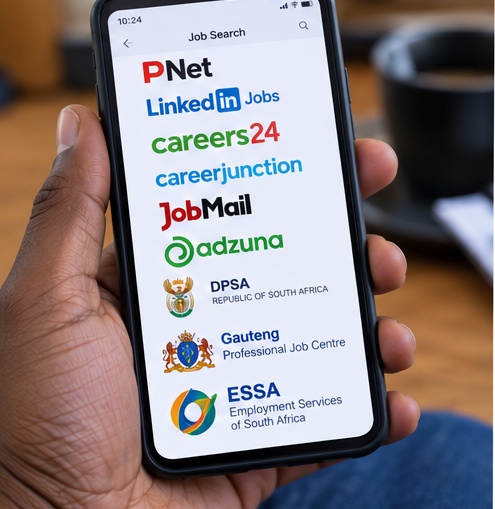
What are the best job search websites in South Africa? Some of the most useful options are PNet, LinkedIn Jobs, Careers24, CareerJunction, Job Mail and Adzuna, while government job seekers should also use official platforms such as the DPSA Public Service Vacancy Circular and Gauteng Professional Job Centre. The best website for you depends on the type of job, your experience level and where you want to work.
Don’t make the mistake of registering on one job website and assuming you’ve covered the entire South African job market. Different employers use different recruitment channels, and some advertise vacancies directly on their own careers pages.
A better strategy is to use two or three broad job websites, relevant specialist or government platforms, and the official careers pages of employers you want to work for.
This guide explains 10 useful job-search websites and resources for South Africans, what each one is best suited to and how to use them without wasting hours applying for unsuitable vacancies.

Table of Contents
Quick Answer: 10 Job Search Websites and Resources in South Africa
| Platform | Best for |
|---|---|
| PNet | Broad private-sector job search |
| LinkedIn Jobs | Professional roles and employer research |
| Careers24 | General South African vacancies |
| CareerJunction | Professional, junior and experienced roles |
| Job Mail | Broad job categories |
| Adzuna | Searching vacancies aggregated from multiple sources |
| ESSA | Official employment services |
| DPSA Vacancy Circular | National and provincial Public Service vacancies |
| Gauteng Professional Job Centre | Gauteng Provincial Government jobs |
| Employer career websites | Applying directly to specific companies |
There isn’t a single website that will always be the “best” for every person.
A graduate looking for an accounting role and someone searching for a government cleaner vacancy need very different search strategies.
Let’s look at each option.
1. PNet
PNet is one of the major general job-search platforms available to South African job seekers.
Its current job categories cover areas including:
- accounting and auditing;
- administration and office support;
- banking and finance;
- engineering;
- retail and FMCG;
- government and NGOs;
- hospitality;
- IT and telecommunications;
- logistics;
- sales;
- security;
- transport.
Importantly for first-time job seekers, PNet also currently provides a Matriculants/Graduate/No Experience category. (PNet)
Who should use PNet?
PNet can be useful if you’re looking for:
- administration jobs;
- finance positions;
- sales jobs;
- retail opportunities;
- IT vacancies;
- engineering jobs;
- logistics positions;
- graduate opportunities;
- professional positions.
How to use PNet effectively
Don’t search only:
jobs
Be specific.
Try searches such as:
administration clerk
junior accountant
retail assistant
warehouse supervisor
graduate software developer
Then narrow your results by location and other available filters.
If you have no previous work history, our guide on how to get a job with no experience in South Africa can help you target vacancies more realistically.
2. LinkedIn Jobs

LinkedIn isn’t only a social network.
Its job-search section currently lists South African opportunities across fields including:
- finance;
- administration;
- retail;
- customer service;
- operations;
- IT;
- marketing;
- HR;
- healthcare;
- sales;
- accounting;
- legal;
- project management.
LinkedIn also allows job seekers to indicate that they’re open to work and provides job-alert functionality. (LinkedIn)
LinkedIn is particularly useful for professional job searches
Suppose you’re interested in:
Junior Financial Analyst
Instead of simply finding the vacancy, you can also research:
- the employer;
- its LinkedIn company page;
- people working there;
- the industry;
- related vacancies.
That additional context can help when tailoring your application or preparing for an interview.
Complete your profile
A nearly empty LinkedIn profile isn’t particularly useful.
At minimum, consider adding your:
- current or most recent role;
- previous employment;
- education;
- relevant skills;
- professional headline;
- accurate location;
- professional profile photo if you choose to use one.
Don’t invent experience to make the profile look stronger.
Use job alerts
If you’re repeatedly searching for:
Administrative Assistant — Johannesburg
creating an alert can be more efficient than manually performing the same search several times every day.
3. Careers24
Careers24 is another established South African job portal.
The platform describes itself as serving job seekers across different sectors and experience levels and offers job alerts to notify users when relevant vacancies are posted. (Careers24)
Who should use Careers24?
It can be worth adding to your search if you’re looking across multiple industries and locations.
Rather than visiting the homepage and randomly scrolling, search according to:
Job title + location
For example:
Receptionist — Roodepoort
Warehouse Assistant — Johannesburg
Junior Developer — Cape Town
Sales Representative — Durban
Set up targeted alerts
Avoid creating extremely broad alerts such as:
South Africa jobs
You’ll probably receive too much irrelevant information.
Instead, use a specific role or occupation.
4. CareerJunction
CareerJunction is useful for job seekers who want to filter opportunities more precisely.
Its listings currently allow users to narrow jobs according to factors such as:
- location;
- category;
- job type;
- job level;
- salary;
- company type.
The platform currently distinguishes permanent, contract, temporary, learnership and internship opportunities, although the number available in each category changes continuously. (CareerJunction)
Why filters matter
Imagine you’re looking specifically for:
Junior administration jobs in Gauteng
Searching the entire site without filters can give you hundreds of irrelevant vacancies.
Instead, combine:
Category: Admin/Office Support
Location: Gauteng
Job level: Junior
Your search becomes much more manageable.
Don’t automatically reject agency vacancies
Some vacancies are advertised by recruitment agencies rather than directly by the employer.
That’s normal.
However, you should still research the recruitment company before sending sensitive information.
5. Job Mail
Job Mail covers a wide range of job categories.
At the time this article was researched, its platform showed vacancies across areas such as:
- administration;
- automotive;
- construction and mining;
- engineering;
- finance;
- IT;
- logistics;
- manufacturing;
- medical;
- retail;
- sales and marketing;
- tourism and hospitality;
- trades and technical work. (Job Mail)
It also offers job-seeker profiles and job alerts. (Job Mail)
Job Mail may be useful for practical and technical searches
If you’re searching for jobs such as:
- technician;
- mechanic;
- retail worker;
- administrator;
- salesperson;
- artisan;
- warehouse employee;
it’s another source worth checking.
But the same rule applies:
Don’t apply simply because a vacancy exists.
Read:
- employer;
- requirements;
- location;
- salary where disclosed;
- responsibilities;
- application instructions.
6. Adzuna South Africa
Adzuna works differently from a traditional single-source job board because it brings together vacancies from job boards and employers.
Its South African site currently lets users browse jobs by categories such as:
- accounting and finance;
- administration;
- customer service;
- engineering;
- graduate jobs;
- healthcare;
- hospitality;
- HR;
- IT;
- logistics;
- manufacturing;
- retail;
- sales;
- teaching;
- trades and construction.
It also provides location-based searching across South African provinces and cities. (Adzuna)
Why use a job-search aggregator?
It can help you discover vacancies from sources you might not otherwise check.
For example, instead of searching ten individual websites for:
admin jobs Gauteng
you can use an aggregator to broaden your discovery process.
But verify where the vacancy comes from
Because aggregators can point you toward vacancies originating elsewhere, pay attention to where you’re being sent when you apply.
If possible, verify the vacancy on:
- the employer’s official website;
- the original recruitment website;
- another authoritative source.
This is particularly important if the vacancy asks for sensitive information.
7. Employment Services of South Africa (ESSA)
ESSA is different from commercial job websites because it’s part of the South African government’s public employment-services system.
The Department of Employment and Labour uses Employment Services of South Africa to support work-seeker registration and employment matching.
For someone searching for work, it’s worth including official employment channels alongside private job boards rather than relying exclusively on commercial websites.
Why include government employment services?
Because the job-search goal isn’t:
“Find one perfect website.”
The goal is:
Increase your legitimate routes to suitable opportunities.
Registering with relevant official services can give you an additional channel while you continue searching elsewhere.
Don’t treat registration as a guarantee that someone will find you a job.
You still need to continue applying.
8. DPSA Public Service Vacancy Circular
If you want a national or provincial government position, commercial job boards should not be your only source.
The Department of Public Service and Administration (DPSA) publishes the Public Service Vacancy Circular.
Circulars contain vacancies from participating national departments and provincial administrations. Recent 2026 circulars have included departments such as Employment and Labour, Home Affairs, Higher Education and Training, Public Works and Infrastructure, Transport and Treasury, along with multiple provincial administrations. (DPSA)
The circular can look overwhelming
Don’t read every page from beginning to end.
Open the document and search keywords such as:
Administration Clerk
Driver
General Worker
Human Resources
Gauteng
KwaZulu-Natal
Finance
On many computers, use Ctrl + F or Command + F to search inside the document.
Read the actual advert
Don’t apply based only on a social-media screenshot.
Check:
- requirements;
- reference number;
- closing date;
- location;
- salary;
- duties;
- application method.
For a full walkthrough, read our JobMarketSA article on how to find government jobs in South Africa.
9. Gauteng Professional Job Centre
Gauteng Professional Job Centre
If you’re searching specifically for Gauteng Provincial Government employment, the GPG Professional Job Centre deserves its own place in your search routine.
The portal allows applicants to search current provincial vacancies and provides details such as:
- position;
- department;
- package;
- closing date.
As of 8 September 2026, the portal was displaying live vacancies with September closing dates. (GPG Professional Job Centre)
The portal’s applicant guidance tells first-time users to register and create a profile, complete their résumé, read vacancy requirements, attach required documents and answer screening questions truthfully. (GPG Professional Job Centre)
Who should use it?
Anyone specifically interested in Gauteng provincial departments.
That can include opportunities within areas such as:
- health;
- infrastructure;
- administration;
- finance;
- human resources;
- professional services.
The available vacancies change, so don’t assume a job you see today will still be available next month.
Check closing dates.
10. Employer Career Websites
This is one of the most important options on the entire list.
If you know which companies you want to work for, go directly to their official careers pages.
For example, if you want to work in:
- retail;
- banking;
- telecommunications;
- mining;
- insurance;
- logistics;
make a list of legitimate employers in that sector.
Then find the Careers, Jobs, Vacancies or Work With Us section of each company’s official website.
Why employer career pages matter
Some employers advertise directly.
A job-board listing may also eventually redirect you to the employer’s own application system.
Going to the company website can help you:
- verify that the vacancy is genuine;
- see other positions from the same employer;
- understand the company;
- find its official application system.
Don’t Google blindly and click sponsored-looking results without checking
Scammers can imitate legitimate companies.
Check the domain carefully.
If you’re applying to a well-known company, make sure you’re actually on that company’s official website before entering sensitive information.
What Are the Best Job Search Websites in South Africa for Different Job Seekers?
The answer changes according to your situation.
For entry-level job seekers
Start with:
- PNet;
- Careers24;
- Job Mail;
- LinkedIn;
- ESSA;
- employer career pages.
PNet currently has a category specifically covering matriculants, graduates and no-experience opportunities. (PNet)
Also search terms such as:
entry level
no experience
junior
trainee
learnership
internship
graduate programme
If lack of experience is your main obstacle, use our guide on how to get a job with no experience in South Africa.
Best Job Search Websites for Government Jobs
For government employment, prioritise official sources.
Use:
- DPSA Public Service Vacancy Circular;
- relevant national department websites;
- provincial recruitment portals;
- Gauteng Professional Job Centre if you’re searching in Gauteng.
Don’t depend on Facebook pages reposting government vacancies.
They may help you discover an opportunity, but verify the vacancy through an official government source before applying.
Best Job Search Websites for Graduates
Graduates should use a combination of:
- LinkedIn;
- PNet;
- Careers24;
- CareerJunction;
- employer graduate-programme pages;
- university career services;
- relevant professional organisations.
Search specifically for:
graduate programme
graduate trainee
internship
junior
candidate programme
entry level
Don’t search only the job title you ultimately want.
For example, someone who wants to become a financial analyst might find more suitable starting opportunities by searching:
graduate financial analyst
finance graduate programme
junior financial analyst
finance internship
Best Job Search Websites for Remote Jobs
LinkedIn and Adzuna both provide ways to discover remote or work-from-home opportunities. LinkedIn’s search includes a remote filter, while Adzuna maintains remote and work-from-home search categories. (LinkedIn)
But remote jobs require extra caution.
The fact that a vacancy says:
Work from home
doesn’t make it legitimate.
Remote-job scams can advertise:
- unrealistic salaries;
- simple data-entry work;
- vague assistant positions;
- “international opportunities”;
- jobs requiring upfront payments.
Verify the employer before applying.
Which Job Website Is Best for Jobs With No Experience?
There isn’t one guaranteed winner.
PNet is useful because it explicitly categorises Matriculants/Graduate/No Experience opportunities. (PNet)
But you should also search:
- Careers24;
- LinkedIn;
- Job Mail;
- ESSA;
- company career pages;
- learnership and internship opportunities.
The important factor isn’t just the website.
It’s the search terms you use.
Instead of:
jobs
try:
retail assistant no experience
administration internship
matriculant jobs
junior customer service
graduate programme
learnership
Should You Use Indeed in South Africa?
Indeed is internationally well known and can surface South African vacancies, but I wouldn’t build your entire South African job search around any one global platform.
Use multiple sources.
More importantly, if you discover an interesting vacancy through a search engine or aggregator, check whether you can verify it through the employer’s official careers page.
Your objective is not to collect accounts on as many websites as possible.
Your objective is to find legitimate, relevant vacancies efficiently.
How Many Job Websites Should You Use?
You don’t need 20.
Using too many can become counterproductive.
A practical setup might be:
2–3 broad job platforms
For example:
- PNet;
- LinkedIn;
- Careers24.
1 specialist source
Depending on your career.
Official government resources
If you’re interested in public-sector employment.
5–10 employer career pages
For companies you particularly want to work for.
Then create alerts.
This is far more manageable than manually visiting dozens of websites every morning.
How to Search Job Websites Properly

Most people type one phrase and scroll.
You can do better.
Suppose you want administrative work.
Don’t search only:
admin
Try:
- Administration Clerk
- Administrative Assistant
- Office Administrator
- Receptionist
- Data Capturer
- Office Assistant
- Registry Clerk
- Junior Administrator
Different employers use different titles for similar work.
Search your location
Add:
- Johannesburg;
- Pretoria;
- Durban;
- Cape Town;
- Bloemfontein;
- Polokwane;
- Gqeberha;
- your relevant province or suburb.
Search by experience level
Try:
- entry level;
- junior;
- graduate;
- internship;
- trainee.
Search adjacent positions
If you want a receptionist role, you may also qualify for:
- front-desk assistant;
- office assistant;
- administrative assistant;
- customer-service administrator.
Don’t limit yourself unnecessarily.
Set Up Job Alerts Instead of Searching All Day
Many job platforms provide alerts.
Use them.
Create focused alerts for your most important searches.
For example:
Alert 1: Administration Clerk — Johannesburg
Alert 2: Data Capturer — Gauteng
Alert 3: Office Assistant — Roodepoort
Alert 4: Junior Administrator — Johannesburg
Then review new vacancies.
Don’t create 50 alerts
You’ll overwhelm your inbox and eventually stop reading them.
Start with 3–6 targeted searches.
Adjust them according to the results.
Don’t Use the Same CV for Every Job Website
Creating profiles on multiple platforms doesn’t mean uploading one generic CV and never touching it again.
Your CV should match the type of role you’re targeting.
Suppose you’re applying for:
Retail Assistant
Your relevant strengths may include:
- customer service;
- merchandising;
- stock replenishment;
- teamwork.
For:
Administration Clerk
you may need to emphasise:
- Microsoft Word;
- Excel;
- filing;
- record keeping;
- data capturing.
The underlying experience remains truthful.
You’re simply making relevant information easier to find.
Read our guide on how to write a CV for a job in South Africa before uploading your CV to multiple job platforms.
Apply Early, but Don’t Rush
Being early can help you avoid missing deadlines.
But speed isn’t an excuse for poor applications.
Before submitting, check:
- employer;
- position;
- requirements;
- location;
- closing date;
- CV;
- documents;
- screening questions;
- contact information.
If your CV has the wrong phone number, applying within five minutes of publication won’t save you.
Track Jobs Across Different Websites
Once you start using several platforms, it’s easy to lose track.
Create a spreadsheet:
| Date | Position | Employer | Website | Closing Date | Status |
|---|---|---|---|---|---|
| 8 Sep | Admin Assistant | Company A | PNet | 16 Sep | Applied |
| 8 Sep | Graduate Trainee | Company B | 20 Sep | Applied | |
| 9 Sep | Clerk | Department C | DPSA | 18 Sep | Preparing |
This prevents:
- duplicate applications;
- forgotten closing dates;
- confusion when employers call;
- losing the original advert.
If you’re unsure how to submit strong applications once you find a vacancy, read how to apply for jobs online in South Africa.
How to Tell Whether a Job Website or Vacancy Is Legitimate
Even legitimate job websites can contain listings that you should evaluate carefully.
Never assume:
“It’s online, so it must be real.”
Before sharing sensitive information:
Check the employer
Does the company exist?
Check its official website
Does the vacancy appear there?
Check the email domain
An alleged major corporation recruiting exclusively from a strange free email address deserves extra scrutiny.
Check the job description
Is it specific?
Check the salary claim
Does it seem unrealistically high for extremely simple work?
Check whether you’re being asked to pay
Be extremely cautious when someone promises employment after an upfront payment.
Check the application destination
Know where you’re being redirected.
8 Job-Search Website Mistakes to Avoid
1. Registering but never applying
Creating a profile isn’t the same as job searching.
2. Applying for everything
Target roles you can realistically perform.
3. Using only one website
Employers recruit through different channels.
4. Ignoring employer career pages
Direct employer websites are important.
5. Searching only one job title
Use related titles.
6. Ignoring closing dates
Don’t spend time preparing an application that’s already closed.
7. Uploading an outdated CV
Review your CV regularly.
8. Paying someone for guaranteed employment
Treat guaranteed-job payment requests as a warning sign.
A Better Weekly Job Search Strategy

Instead of spending eight hours every day refreshing websites, create a repeatable system.
Monday
Check:
- PNet;
- LinkedIn;
- Careers24.
Shortlist suitable opportunities.
Tuesday
Check:
- CareerJunction;
- Job Mail;
- Adzuna.
Apply to strong matches.
Wednesday
Check employer career pages.
Look at companies you’ve deliberately selected.
Thursday
Check government resources if public-sector work interests you.
Review DPSA and relevant provincial portals.
Friday
Review job alerts and newly published vacancies.
Weekend
Update:
- CV;
- application tracker;
- LinkedIn profile;
- interview preparation.
You don’t have to follow these exact days.
The principle is to search systematically instead of randomly.
Frequently Asked Questions
What are the best job search websites in South Africa?
Some useful options include PNet, LinkedIn Jobs, Careers24, CareerJunction, Job Mail and Adzuna. Government job seekers should also use official sources such as the DPSA Public Service Vacancy Circular and relevant provincial recruitment portals.
Which website is best for finding jobs in South Africa?
There isn’t one website that’s best for everyone. PNet and Careers24 cover broad South African vacancies, LinkedIn can be especially useful for professional roles, and official government portals are more appropriate for Public Service vacancies.
Which job website is best for people with no experience?
PNet currently includes a Matriculants/Graduate/No Experience category. First-time job seekers should also search Careers24, LinkedIn, Job Mail, ESSA and employer career pages using terms such as “entry level,” “trainee,” “learnership,” “internship” and “no experience.” (PNet)
What is the best website for government jobs in South Africa?
Start with the DPSA Public Service Vacancy Circular for Public Service vacancies and check relevant national department and provincial recruitment portals. Gauteng applicants can also use the GPG Professional Job Centre. (GPG Professional Job Centre)
Can I find remote jobs on South African job websites?
Yes. Platforms including LinkedIn and Adzuna provide ways to search for remote or work-from-home opportunities. Always verify the employer because remote-job adverts can also be used in recruitment scams. (LinkedIn)
Should I use more than one job website?
Yes. Different employers use different recruitment channels. Using a small selection of broad platforms alongside employer career pages and relevant specialist or government sources gives you wider coverage.
Should I apply through a job board or company website?
Follow the vacancy’s legitimate application instructions. When possible, checking the employer’s official careers page is useful for verifying the vacancy and discovering other openings.
Are job-search websites enough to get a job?
No website can guarantee employment. Job platforms help you discover opportunities, but you still need to target suitable vacancies, submit strong applications, maintain an accurate CV and perform well during interviews.
Conclusion
If you’re asking what are the best job search websites in South Africa, don’t choose only one.
Build a small job-search system.
Use platforms such as PNet, LinkedIn, Careers24, CareerJunction, Job Mail and Adzuna to discover private-sector opportunities. Add official resources such as the DPSA Public Service Vacancy Circular and provincial recruitment portals when searching for government work.
Then add the most important source many job seekers overlook:
the official career websites of employers you genuinely want to work for.
The website itself won’t get you hired.
Your advantage comes from using these platforms efficiently: create targeted alerts, search several relevant job titles, verify employers, tailor your CV, apply for positions you genuinely match and track every application.
Once you’ve found a suitable vacancy, use our JobMarketSA guide on how to apply for jobs online in South Africa to make sure the application itself is completed properly.