
How Do You Know If They Will Hire You After an Interview?
How do you know if they will hire you after an interview? You cannot know for certain until the employer gives you a formal offer, but some signs can suggest that you are still a strong candidate. These include the interviewer discussing next steps in detail, asking about your availability or notice period, checking references or qualifications, introducing you to potential colleagues, explaining the role in greater depth, or arranging another interview.
None of these signs guarantees that you have the job. Employers may still be interviewing other candidates, conducting assessments, completing reference checks or waiting for internal approval before making a final decision.
That distinction matters because it is very easy to leave an interview feeling either extremely confident or convinced that you failed, only to receive the opposite result.
The South African Government describes an interview as an opportunity to convince a potential employer that you understand what they need and have what it takes to do the job. South African Government
Once that interview is over, however, the decision is no longer entirely in your hands.
This guide explains which post-interview signs are genuinely encouraging, which ones job seekers often misread, what reference and background checks may mean, how long you should wait, and what you should do while waiting for an answer.
Table of Contents
What Are the Strongest Signs You May Get the Job After an Interview?
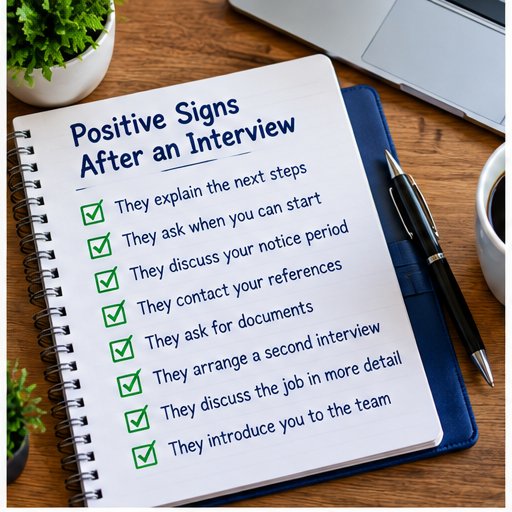
There is no universal signal that means “you are hired”.
Recruitment processes vary enormously. A small retail business in Johannesburg may make a decision quickly, while a large corporation or government department may have several approval stages.
As a general guide, these are encouraging developments:
| What happens | What it may mean | How strong is the sign? |
|---|---|---|
| They clearly explain the next stage | You are probably still being considered | Positive |
| They ask when you can start | They may be considering practical arrangements | Positive |
| They ask about your notice period | Your potential availability matters to them | Positive |
| They request references | They may be verifying your application | Stronger positive sign |
| They request supporting documents | You may have progressed to another recruitment stage | Positive, but process-dependent |
| They arrange a second interview | You have progressed further | Strong positive sign |
| They introduce you to team members | They may be assessing fit or giving you more information | Positive, but not decisive |
| The conversation becomes detailed about the actual job | The employer may be seriously evaluating you | Encouraging |
| They discuss background or qualification checks | You may have reached a verification stage | Encouraging |
| You receive a formal written offer | The employer has actually offered you the position | Decisive |
The key is to distinguish interest from an offer.
A friendly interviewer can be interested in you without having decided to hire you. A reference request can be encouraging without guaranteeing selection. Even a discussion about your possible starting date should not be treated as an appointment.
Until the employer formally confirms the outcome, continue your job search.
1. The Interviewer Explains the Next Steps Clearly
One encouraging sign is when the interviewer gives you specific information about what happens after the interview.
For example:
“We are finishing interviews on Thursday. Candidates who progress will be contacted for a second interview.”
That is more useful than a vague:
“We will be in touch.”
Detailed next-step information may indicate that the employer is taking your candidacy seriously. More importantly, it gives you a realistic idea of the process.
But do not overanalyse it.
Some organisations explain the recruitment process to every candidate as standard practice.
Instead of asking yourself, “Does this mean I got the job?”, listen for useful information:
- Is there another interview?
- Is there an assessment?
- Will references be contacted?
- When should candidates expect feedback?
- Is there a proposed starting period?
- Does HR still need to approve the appointment?
These details help you understand where you stand without trying to read the interviewer’s mind.
2. They Ask When You Can Start
Being asked, “When would you be available to start?” can be a positive sign because the employer is considering a practical issue that would matter if they appointed you.
For an unemployed candidate, the answer might be:
“I am available to start immediately, subject to your onboarding requirements.”
Someone who is currently employed might say:
“I would need to complete my contractual notice period, but I can confirm the exact dates if I receive an offer.”
The question becomes more encouraging when it is part of a detailed discussion about availability, notice periods or a proposed start date.
However, many employers ask every shortlisted candidate about availability.
So:
“When can you start?” = encouraging.
It does not automatically mean:
“You have the job.”
3. They Ask About Your Notice Period
If you are currently employed, an interviewer may ask how much notice you must give your existing employer.
This is closely related to asking when you can start.
The employer may simply need to know whether your availability matches its recruitment timeline.
For example, if the organisation needs someone urgently, a candidate’s notice period could affect the practical side of the appointment.
Answer accurately. Do not promise to start immediately if you have obligations you cannot realistically meet.
4. They Contact Your References
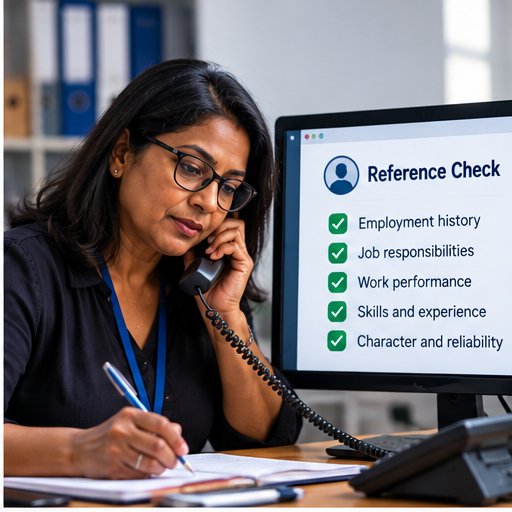
A reference check is one of the more meaningful post-interview developments because the employer is taking an additional step to verify information about you.
South African Government CV guidance recommends including credible references who can provide truthful information about your work ethic and credibility, and advises candidates to confirm that their references’ contact details are current and that they remain available. South African Government
If a former supervisor tells you that the company contacted them after your interview, that can therefore be encouraging.
But again, it is not an appointment letter.
An organisation might check references for more than one final candidate.
What should you do if they say they will contact your references?
Contact your references and tell them:
- which position you interviewed for;
- which company may contact them;
- roughly when they might be contacted;
- which of your previous responsibilities are relevant to the position.
Do not tell a reference what to say or ask them to provide false information.
You simply want them to recognise the call or email and be prepared to provide an accurate reference.
5. They Ask for Qualifications or Supporting Documents
An employer asking for documents after an interview can indicate that your application has progressed.
The significance depends on the employer and recruitment process.
For example, some current Department of Employment and Labour vacancy notices state that shortlisted candidates must provide qualifications and supporting documents before or by the interview stage. Some positions also involve suitability checks such as qualification, citizenship, employment or criminal-record verification. Labour South Africa
That illustrates an important point:
Document requests do not mean exactly the same thing at every organisation.
One company may request documents from everyone before interviewing them. Another may request additional documents only from its preferred candidates.
Read the communication carefully.
If HR requests documents, provide exactly what is legitimately required and within the requested timeframe.
Also verify that the request genuinely comes from the employer before sending sensitive personal information.
6. They Invite You to a Second Interview
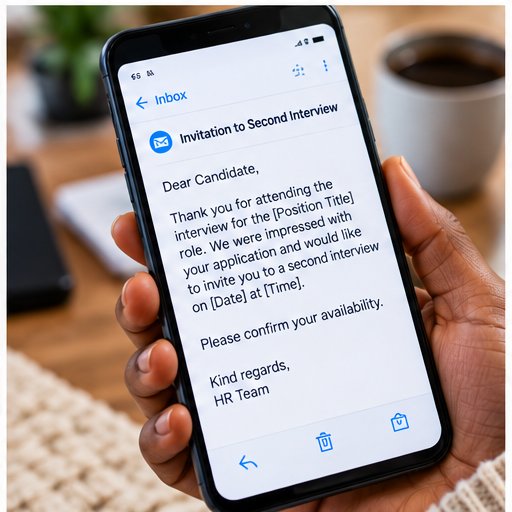
A second interview is usually a clearer sign of progress.
You have not necessarily got the job, but you have advanced beyond the previous stage.
The second interview might involve:
- a senior manager;
- the person who would supervise you;
- another interview panel;
- HR;
- a department head;
- a practical assessment;
- a technical discussion.
Prepare seriously for it.
Do not assume that because the first interview went well, the second one is just a formality.
For some roles, later stages can include assessments. For example, current Department of Employment and Labour recruitment information shows that certain shortlisted candidates may undergo practical, technical, integrity or psychometric assessments depending on the position. Labour South Africa
Your invitation therefore means you have progressed, not necessarily that the decision has already been made.
7. The Interviewer Starts “Selling” the Job to You
Interviews normally begin with the employer assessing you.
Sometimes the conversation changes.
The interviewer may start explaining why people enjoy working there, what training is available, how the team operates, what projects are coming up, or what opportunities the position could provide.
That can feel very different from simply asking questions.
Why?
Because the employer may now be trying to determine whether you would accept the position if selected.
That is encouraging.
However, professional interviewers may also explain the role thoroughly to every candidate so that each person can make an informed decision.
Look at the entire interview rather than one comment.
8. They Introduce You to Potential Colleagues or a Manager
Imagine you interview for an administrative position.
After the formal questions, the interviewer says:
“Before you leave, I’d like you to meet the person who manages this department.”
Or perhaps you are shown the workplace and introduced to the team.
That may indicate genuine interest.
It could mean the employer wants colleagues to meet you, wants you to understand the working environment, or is beginning to picture how you could fit into the team.
But introductions alone are not proof of employment.
Some organisations include workplace tours or team introductions in their standard interview process.
9. The Interview Becomes More Detailed About the Actual Job
Another encouraging sign is when the discussion moves beyond generic interview questions into detailed conversations about the work you would actually perform.
For example, an interviewer hiring a retail supervisor might begin asking:
- How would you handle an understaffed shift?
- Have you managed stock counts?
- How would you deal with repeated stock losses?
- Are you comfortable with weekend shifts?
- Have you supervised employees before?
- How would you deal with a difficult customer?
This is not necessarily a sign that the job is yours. These may simply be competency questions.
But if the conversation develops into detailed discussions about real responsibilities, schedules, systems, expectations and workplace challenges, it can indicate serious evaluation of your suitability.
The Department of Employment and Labour’s job-search guidance advises candidates to understand their personality, interests, talents, skills, qualifications, work experience and accomplishments so that they can clearly communicate what they can offer during an interview. Labour South Africa
That is why detailed questions are your opportunity to connect your real experience to the employer’s needs.
10. The Interview Runs Longer Than Expected
A long interview can be encouraging, but this is one of the easiest signs to misinterpret.
If an interviewer scheduled 30 minutes and speaks to you for an hour because the conversation is productive and they keep asking relevant questions, that may show interest.
But duration alone tells you very little.
An interview can run late because:
- the panel started late;
- the interviewer talks a lot;
- the company uses a long question list;
- there are technical problems;
- additional people join the interview;
- the role requires a detailed assessment.
Similarly, a short interview does not automatically mean rejection.
A highly structured interview might be intentionally brief.
Do not judge your chances solely by the clock.
Which Post-Interview Signs Matter Most?
Some signs are much more useful than others.
| Stronger evidence of progress | Easy to misinterpret |
|---|---|
| Invitation to another recruitment stage | Interviewer smiling |
| Request for legitimate reference checks | Interview lasting a long time |
| Request for documents at a later recruitment stage | Interviewer saying “great answer” |
| Formal assessment invitation | Casual conversation |
| Discussion of specific next-stage arrangements | Friendly body language |
| Formal written job offer | “We’ll be in touch” |
| HR contacting you about appointment requirements | Interviewer walking you to the door |
The right-hand column is not negative. Those things may happen during an excellent interview.
They are simply weak evidence.
Signs an Interview Went Well — But Do Not Guarantee You Will Be Hired
This distinction can save you a great deal of unnecessary anxiety.
The interviewer smiled and seemed friendly
Good.
It probably made the interview more comfortable.
But professional interviewers often behave politely toward every candidate.
They said, “That’s a good answer”
Also encouraging.
It tells you that a particular response landed well. It does not tell you how the other candidates performed.
You made them laugh
Rapport can help create a positive interaction, but recruitment decisions should ultimately relate to suitability for the position.
They said, “We’ll be in touch”
This phrase tells you almost nothing unless it is accompanied by a clear timeline or next step.
They asked about salary
Salary discussions can be meaningful, particularly later in a recruitment process.
But some employers ask every shortlisted candidate about salary expectations.
Do not resign from your current job because an interviewer asked what salary you expect.
They asked whether you have other interviews
The employer may be assessing your availability or recruitment timeline.
Again, it is encouraging interest—not an offer.
What Are Possible Signs That You May Not Get the Job?
Job seekers also search for “bad interview signs”, but these need to be treated cautiously.
A single awkward moment does not mean you have failed.
Possible concerns could include:
- the interviewer discovers that you do not meet an essential requirement;
- you admit that an important qualification on your CV is inaccurate;
- your availability is fundamentally incompatible with the role;
- you cannot provide evidence for experience you claimed;
- you behave disrespectfully toward the interviewer;
- you discover that the position requires something you cannot legally or practically provide.
Even then, you may not know the outcome immediately.
Things such as a serious interviewer, limited eye contact, a short interview or few follow-up questions are not reliable proof of rejection.
Different people interview differently.
Do not spend the evening analysing whether the interviewer smiled enough.
How Do You Know If They Will Hire You After an Interview When They Check Your References?
A reference check is encouraging because the employer is investing time in verifying your information, but you should not assume that a reference check equals a job offer.
The organisation may check:
- employment history;
- responsibilities;
- work performance;
- dates of employment;
- suitability;
- information relevant to the particular position.
What is checked varies according to the organisation, position and applicable recruitment process.
Government recruitment also demonstrates how extensive post-interview procedures can sometimes be. Some Department of Employment and Labour vacancies state that suitable candidates may undergo personnel suitability checks, including qualification and employment verification. Labour South Africa
So if a reference tells you, “They called me today,” take it as positive progress.
Then keep waiting for official communication.
What If They Ask, “When Can You Start?”
This deserves special attention because candidates frequently interpret it as an informal offer.
Suppose the interviewer asks:
“If you were successful, when could you start?”
Notice the key words: “if you were successful.”
The employer is gathering information.
A good response is straightforward and truthful.
If you are immediately available:
“I’m currently available, so I could start as soon as required, subject to completing your recruitment and onboarding process.”
If you are employed:
“I would need to honour my notice period with my current employer. Once I know the proposed starting date, I can confirm my availability accurately.”
Do not make promises you cannot keep simply because you are excited.
What Happens After a Job Interview?
The process differs between employers, but it may look something like this:
- The remaining candidates are interviewed.
- Interview results are compared.
- The employer decides who progresses.
- Additional assessments may be conducted where applicable.
- References or information may be verified.
- Internal approval may be required.
- A preferred candidate may be contacted.
- Employment terms may be discussed.
- A formal offer may follow.
Not every employer follows this exact order.
Some steps may happen before the interview, some may not be required at all, and larger organisations may have considerably more formal recruitment procedures.
This is why another person’s experience—“They called me two days later”—does not establish how long your application should take.
How Long After an Interview Does It Take to Hear Back?
There is no single South African rule saying every employer must respond within a particular number of days after an interview.
Timelines depend on the organisation and its recruitment process.
A private company might decide quickly. A large organisation could require panel recommendations, HR processes, assessments, verification and approval.
Government recruitment can also take time. For example, some Department of Employment and Labour vacancy notices explicitly tell applicants that correspondence may be limited to shortlisted candidates and provide their own timeframes for when applicants should regard an application as unsuccessful. Labour South Africa
The practical rule is therefore:
Follow the timeline the employer gave you.
If the interviewer says, “We will contact candidates by Friday,” wait until that timeframe has passed before following up.
If no timeline was given, a polite follow-up after a reasonable period is appropriate.
Should You Follow Up After an Interview?
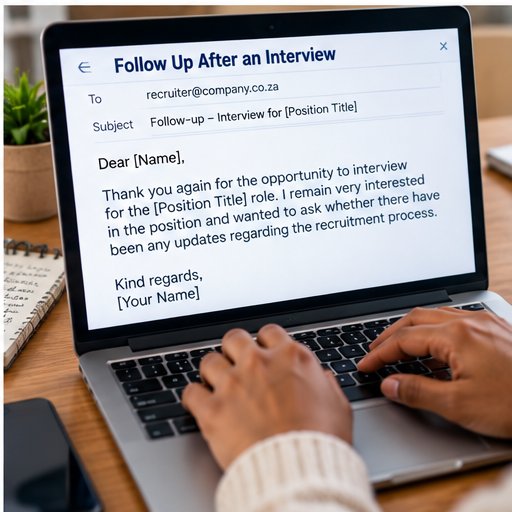
Yes, a professional follow-up can be appropriate.
It should not become repeated calling, messaging or emailing.
A simple message might say:
Subject: Follow-up — [Position Title] Interview
Dear [Name],
Thank you again for the opportunity to interview for the [position] role. I remain interested in the position and wanted to ask whether there has been any update regarding the recruitment process.
Kind regards,
[Your name]
If the employer gave you a specific date for feedback, wait until that date has passed.
If they respond that the process is still ongoing, accept that answer professionally.
What If the Employer Does Not Contact You?
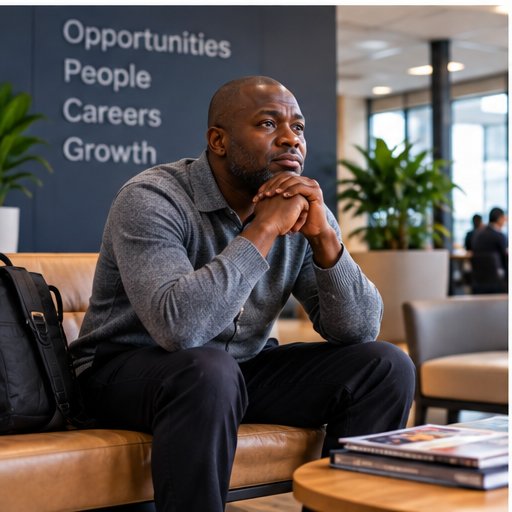
Silence after an interview is frustrating, particularly when you felt that it went well.
But do not put your entire job search on hold.
Continue:
- checking legitimate vacancies;
- submitting applications;
- preparing for other interviews;
- improving your CV;
- developing relevant skills;
- following up appropriately where necessary.
The South African Government’s employment guidance points out that job seekers compete with other applicants for available positions. South African Government
You may have performed well and still lose the position to someone whose experience more closely matches a specific requirement.
That is different from having “failed” the interview.
Do Not Resign Because You Think the Interview Went Well
This is one of the most important practical points in this article.
Suppose you currently have a job.
You attend an interview elsewhere, and everything feels perfect.
The manager says:
“You sound exactly like what we’re looking for.”
They ask about your notice period.
They introduce you to the team.
They ask when you can start.
You leave convinced you have the job.
Do not resign merely because of these signals.
Wait until the prospective employer has actually communicated an offer and you understand the terms and any conditions attached to it.
Positive interview signs are not a substitute for an employment offer.
A Realistic South African Example
Imagine Lerato, a fictional job seeker in Pretoria, interviews for an administrative assistant position.
Her interview is scheduled for 45 minutes but lasts about an hour.
During the conversation, the panel asks about her Microsoft Office skills, previous administrative duties and experience dealing with customers.
Near the end, the manager asks:
“If you were successful, how soon could you start?”
Lerato says she is available immediately.
HR then asks whether they may contact the references listed on her CV.
Two days later, one of her references tells her that the company called.
Lerato has several encouraging signs:
- the employer is checking her references;
- her availability has been discussed;
- the interview involved detailed job-related questions.
But Lerato should not post on Facebook that she has a new job, stop applying elsewhere or make financial commitments based on the expected salary.
She should wait for the employer’s official decision.
That is the difference between being optimistic and assuming an outcome that has not been confirmed.
What Should You Do Immediately After the Interview?
Instead of repeatedly trying to decode the interviewer’s behaviour, use the waiting period productively.
1. Write down what happened
As soon as possible, record:
- questions you were asked;
- answers that went well;
- answers you struggled with;
- information you learned about the role;
- names of relevant interviewers;
- any timeline they gave you;
- anything you need to send afterwards.
This becomes useful preparation for your next interview or a second-round interview.
2. Complete anything the employer requested
If they legitimately requested a portfolio, qualification, reference details or another document, provide it through the instructed channel.
3. Prepare your references
If reference checks are expected, ensure your referees know they may be contacted.
4. Follow up at the appropriate time
Use the employer’s stated recruitment timeline.
5. Continue applying for jobs
This is the step candidates often skip.
Do not stop your search because one interview felt promising.
Continue until you have secured the right opportunity.
How to Improve Your Chances Before the Next Interview
You cannot control the final hiring decision, but you can improve how well you present your suitability.
The South African Government’s interview guidance recommends researching the employer, knowing the interview location and contact person, preparing answers to common and challenging questions, preparing questions for the interviewer and developing a short pitch explaining your strengths. South African Government
The Western Cape Government’s interview guidance similarly recommends researching the organisation, understanding yourself, preparing questions and arriving prepared. Western Cape Government
The Department of Employment and Labour’s job-search material also emphasises understanding your skills, qualifications, work experience and accomplishments before the interview. Labour South Africa
Preparation cannot guarantee employment.
What it can do is help you present accurate evidence that you meet the employer’s requirements.
Be Careful of Fake “You Got the Job” Messages
After applying for multiple positions, you may receive messages claiming that you have been selected.
Be cautious, particularly if you cannot connect the message to a legitimate application or interview.
Warning signs may include:
- being told to pay money to secure the position;
- being asked for a banking PIN or password;
- suspicious email addresses pretending to represent a known company;
- unexpected messages claiming you were hired for a job you never interviewed for;
- requests for unnecessary sensitive information;
- pressure to make an immediate payment.
A genuine recruitment process can require legitimate documents and personal information at appropriate stages. The issue is not simply that an employer asks for information—it is whether the request is legitimate, necessary and genuinely connected to the organisation.
If uncertain, independently find the organisation’s official website or switchboard and verify the communication.
The Best Way to Think About Post-Interview Signs
Try separating what happens after an interview into three categories.
Category 1: Encouraging
Examples:
- positive discussion;
- detailed questions;
- discussion of availability;
- introductions;
- next-step explanations.
These can make you optimistic.
Category 2: Evidence that you have progressed
Examples:
- second interview;
- formal assessment;
- legitimate reference check;
- request for documents at a later stage;
- HR contacting you about another recruitment stage.
These provide stronger evidence that your application remains active.
Category 3: Confirmation
A formal employment offer is fundamentally different from a “good sign”.
That is the stage where you stop guessing.
Frequently Asked Questions
1. How do you know if they will hire you after an interview?
You cannot know for certain until the employer confirms its decision. Encouraging signs include detailed next-step discussions, questions about availability, reference checks, further assessments, document requests and invitations to additional interviews.
2. Is being asked when I can start a good sign?
Yes, it can be encouraging because the employer is considering your availability. However, employers may ask several candidates the same question, so it does not guarantee that you will be hired.
3. Does a reference check mean I got the job?
Not necessarily. It usually means the employer is verifying information or progressing with its recruitment process. More than one candidate may undergo reference checks.
4. Is a second interview a good sign?
Yes. A second interview generally means that you have progressed to another stage. You should still prepare carefully because the employer may still be comparing candidates.
5. What does it mean if an interview lasted longer than expected?
A longer interview may indicate that the interviewer was interested and wanted to continue the discussion, but interview length alone is not a reliable hiring signal.
6. Is a short interview a bad sign?
Not automatically. Some interviews are highly structured or intentionally short. Focus on what was discussed rather than judging your chances purely by duration.
7. Should I stop applying for jobs if my interview went well?
No. Continue applying until you have secured a suitable position. A strong interview can still result in another candidate being selected.
8. Should I contact the interviewer after the interview?
A polite follow-up can be appropriate, especially after the timeframe the employer gave you has passed. Avoid repeatedly contacting the recruiter for updates.
9. What if they said, “We’ll be in touch”?
By itself, this is not a strong hiring signal. It may simply be the interviewer’s standard way of ending an interview. A specific next step or timeline is more useful.
10. Can an employer change its mind after checking my references?
A reference check is part of the recruitment process rather than a guarantee of appointment. Employers may still need to complete other checks, compare candidates or obtain internal approval.
Final Thoughts
If you are wondering how do you know if they will hire you after an interview?, look for evidence that the recruitment process is moving forward rather than trying to interpret every smile, handshake or comment.
A second interview, legitimate reference check, assessment invitation, request for relevant documents or detailed discussion about next steps can all be encouraging.
But there is one rule worth keeping:
A positive sign is not the same as a job offer.
Stay professional, follow up appropriately, keep applying for other suitable positions and wait for official confirmation before making major decisions based on the new job.