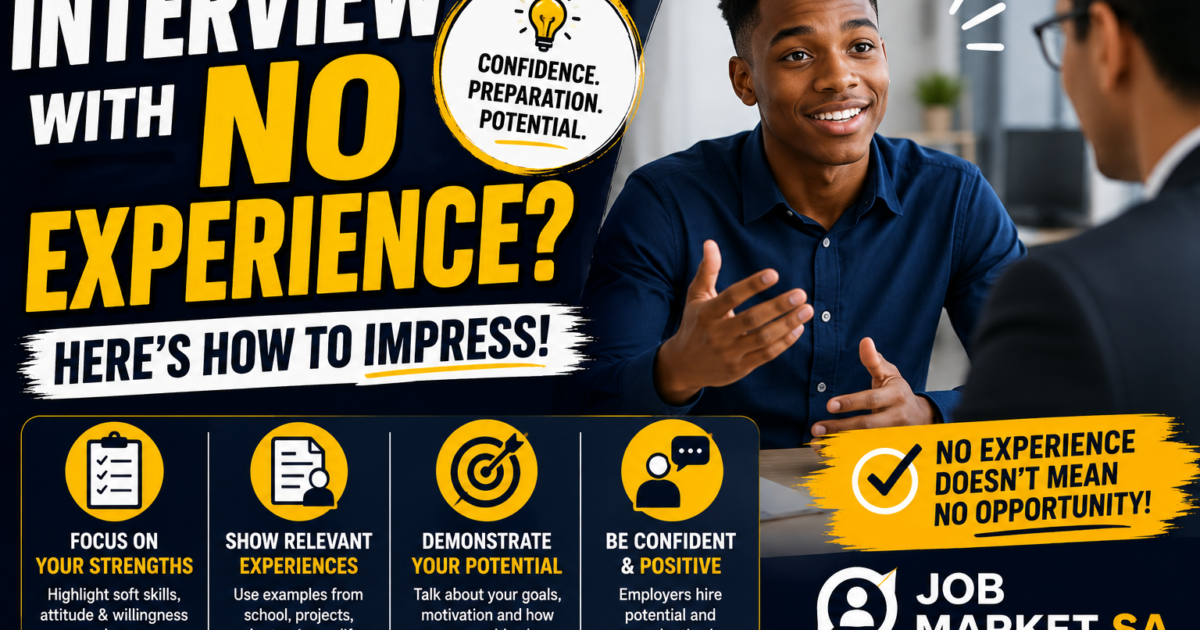
Not having formal work experience does not put you out of the running for entry-level jobs — employers hiring for these roles expect it. What they are really looking for is attitude, reliability and willingness to learn. Your job in the interview is to show those things using whatever you have done. Here is how.
Realise that “no experience” doesn’t mean “nothing to offer”
You have more to work with than you think. All of the following count as real, useful experience in an interview:
- School activities, prefect duties, sports teams or clubs.
- Helping in a family business, spaza shop or on a stall.
- Volunteering at church, an NGO or in your community.
- Short courses, learnerships or online certificates.
- Piece jobs, informal work, or looking after younger siblings.
- Personal projects, like fixing phones or doing hair for people.
Turn those into transferable skills
Employers care about skills, not job titles. Translate what you have done into the qualities they want:
- Running a stall or helping in a shop → handling cash, serving customers, being reliable.
- Captaining a sports team → leadership, teamwork, discipline.
- Looking after siblings → responsibility, time management, staying calm under pressure.
- Volunteering → commitment, working with people, willingness to help.
Prepare for the “you have no experience” moment
They may say it directly. Do not get defensive. Acknowledge it and pivot to what you offer: “That’s true, this would be my first formal role. But I’ve stayed active by helping in my uncle’s shop and doing a computer course, and I’m a fast learner. I’m ready to put in the work to prove myself.”
Practise the key questions with your own examples
Prepare “tell me about yourself” using the framework for first-time job seekers, and get ready for “why should we hire you?” by focusing on reliability and willingness to learn. Have one real story ready about a time you were responsible, solved a small problem, or helped someone.
Show you understand the job
Nothing beats “no experience” faster than clearly understanding what the role involves and why you want it. Read the advert closely, learn a little about the company, and be ready to explain why this kind of work appeals to you.
Common mistakes for first-time applicants
- Apologising repeatedly for having no experience — say it once, then move on to your strengths.
- Saying “I’ll do anything” — it sounds desperate rather than interested.
- Dismissing your own informal work as “nothing”.
- Not researching the role, so you cannot show real interest.
- Freezing on “tell me about yourself” because you think you have nothing to say.
Talk up your learnerships, courses and volunteering
If you have done a learnership, an online course, a computer or first-aid certificate, or any structured training, treat it as real preparation for work — because it is. Explain what you learned and how it applies: “I completed a computer literacy course, so I’m comfortable with email and basic spreadsheets, which I know this admin role needs.”
A short mock exchange
Interviewer: “You don’t have any formal work experience. Why should we hire you over someone who does?”
You: “That’s fair — this would be my first formal job. But I’ve stayed active: I helped run my family’s stall, where I handled cash and customers, and I completed a short course this year. I’m reliable, I learn fast, and I’ll give this role my full effort. Sometimes a fresh, motivated person who’s eager to prove themselves is exactly what a team needs.”
Show you’re in it for the long run
Employers worry that first-timers will leave quickly once they gain experience. Reassure them: mention that you want to learn, grow and build a career in their kind of work. Showing you intend to stay makes you a safer, more attractive hire.
Let your energy be your advantage
You may not have experience, but you can bring enthusiasm, punctuality and a willingness to do the work others avoid. Experienced candidates can be complacent; a hungry, reliable first-timer is genuinely appealing to many employers. Lean into that.
Do this now
List everything you have done outside formal work — school, family, volunteering, courses, piece jobs. Next to each, write the skill it shows. Keep this list and pull examples from it during the interview.
Frequently asked questions
Will employers really consider me with no experience?
For entry-level jobs, learnerships and general worker roles, yes — these exist precisely for people starting out. Attitude and reliability often matter more than a work history.
Should I lie or exaggerate to seem more experienced?
Never. It will unravel quickly and cost you the job. Honest enthusiasm beats a fake CV.
What should I put on my CV if I have no experience?
Lead with your education, skills and any informal or volunteer work. Our guide to a CV with no work experience walks through exactly how.
How do I sound confident when I’m nervous?
Preparation is the cure for nerves. Practise your answers out loud, arrive early, and remember the employer already knows this is your first job.
The bottom line
You are not empty-handed. Gather your school, community, family and course experiences, translate them into skills, and show up ready to learn. That is exactly what entry-level employers want. Round out your prep with how to prepare for a job interview.