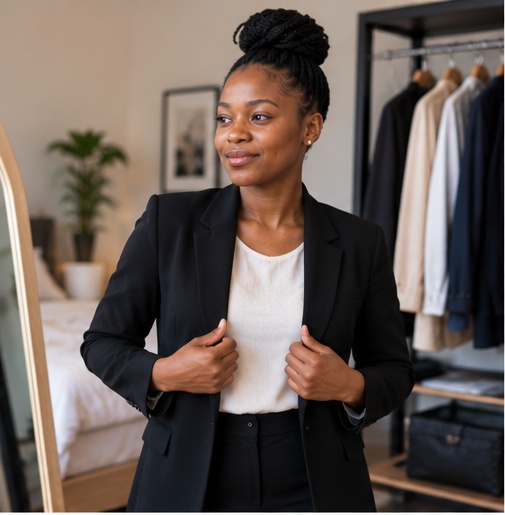
What to Wear to a Job Interview in South Africa: 12 Outfit Tips
Knowing what to wear to a job interview in South Africa doesn’t mean you need an expensive suit or designer clothes. Your goal is to arrive looking clean, neat, professional and appropriately dressed for the position you’re applying for. The right interview outfit should support the impression you want to make—not distract the interviewer from your skills and experience.
South Africa’s Department of Employment and Labour advises job seekers to dress appropriately for the type of job they’re interviewing for and suggests dressing roughly one level smarter than an ordinary working day. Its interview-safety guidance also recommends a conservative, professional appearance. (Department of Labour)
That means the best outfit for an accountant interviewing at a corporate office may be different from what someone should wear for a warehouse, retail, restaurant or technical position.
This guide explains how to make the right choice without spending unnecessary money.
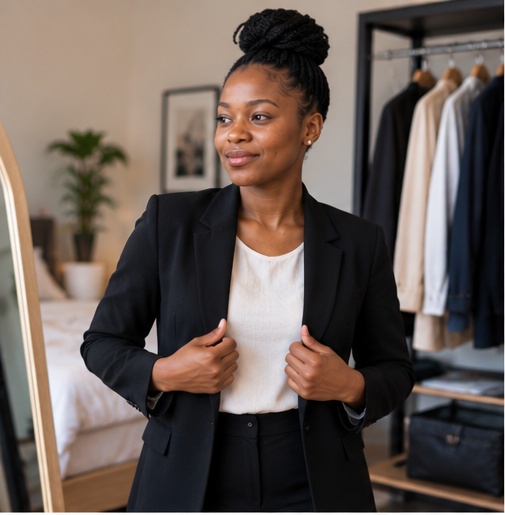
Table of Contents
1. Dress for the Job You’re Applying For
The first rule is simple:
Dress for the workplace and position—not for a completely different industry.
Think about what employees in that environment normally wear.
Then make your interview outfit slightly smarter.
For example:
| Interview | Appropriate starting point |
|---|---|
| Corporate/finance | Formal business clothing |
| Administration | Smart business or business-casual clothing |
| Government | Conservative professional clothing |
| Retail | Neat smart-casual or business-casual clothing |
| Call centre | Smart business-casual clothing |
| Hospitality | Clean, polished professional clothing |
| Warehouse | Neat, practical smart-casual clothing |
| Trade/technical | Clean, practical professional clothing |
| Creative role | Professional clothing with more flexibility |
The Department of Employment and Labour specifically recommends dressing appropriately for the type of job and going one level smarter than what you’d normally wear during the working day. (Department of Labour)
Don’t overdress just to look important
Imagine you’re interviewing for a warehouse assistant position.
You probably don’t need:
- a three-piece suit;
- expensive cufflinks;
- luxury shoes;
- a tie and pocket square.
A clean collared shirt, neat trousers and clean closed shoes may be entirely appropriate.
At the same time, arriving in dirty workwear simply because the job involves physical labour isn’t ideal either.
The objective is:
“I took this opportunity seriously.”
2. Choose Clean, Neat and Well-Fitting Clothes
Your outfit doesn’t need to be expensive.
But it should be:
- clean;
- neat;
- comfortable;
- appropriately fitted;
- free from obvious stains;
- free from major wrinkles;
- suitable for the environment.
A R250 shirt that is clean, ironed and fits properly can make a better impression than an expensive shirt that is dirty, badly wrinkled or several sizes too large.
Check your outfit the night before
Don’t wait until the morning of the interview.
Check:
- Are there stains?
- Are any buttons missing?
- Does the zip work?
- Does everything still fit?
- Do the shoes need cleaning?
- Does the shirt need ironing?
- Is anything damaged?
Preparing the night before also reduces unnecessary stress on interview day.
If you need help with the rest of your preparation, read our guide on how to prepare for a job interview in South Africa.
3. What Should Men Wear to a Job Interview in South Africa?
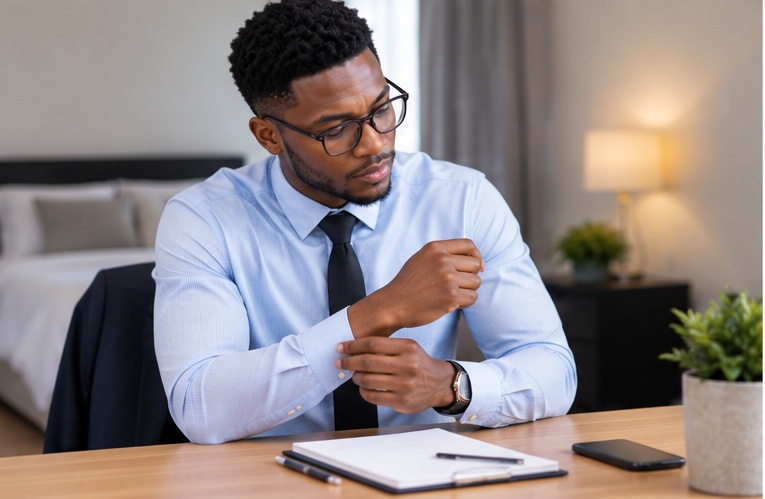
There isn’t one mandatory outfit for every man.
For many office-based interviews, a safe option could be:
- collared shirt;
- smart trousers or chinos;
- clean closed shoes;
- belt where appropriate;
- blazer or jacket for more formal roles.
For highly formal corporate positions, a suit may be appropriate.
Example: Corporate interview
A man interviewing for a professional finance position might wear:
White or light-coloured shirt + dark trousers + formal shoes + blazer
Depending on the organisation, a tie or full suit may also be appropriate.
Example: Administration interview
You could wear:
Collared shirt + chinos/smart trousers + clean closed shoes
Example: Retail interview
A practical combination could be:
Plain collared shirt or neat polo + chinos/smart trousers + clean shoes
The exact level of formality depends on the employer.
Avoid
For most conventional interviews, be cautious with:
- dirty sneakers;
- ripped jeans;
- very baggy clothing;
- slogan T-shirts;
- stained clothing;
- flip-flops;
- clothing you’d normally wear to a nightclub.
The question isn’t whether a particular item is fashionable.
Ask:
Does this help me look ready for this workplace?
4. What Should Women Wear to a Job Interview in South Africa?

Women also have several professional options.
Depending on the position and workplace, these could include:
- blouse or professional top;
- tailored trousers;
- professional skirt;
- modest professional dress;
- blazer;
- cardigan;
- clean flats;
- professional closed shoes;
- comfortable low heels.
Corporate example
Professional blouse + tailored trousers/skirt + blazer + formal shoes
Administration example
Simple blouse + smart trousers + flats
Retail example
Professional top + neat trousers + comfortable clean shoes
The goal isn’t to dress according to an outdated stereotype.
The goal is to choose clothing that allows you to sit, walk and speak comfortably while presenting yourself professionally.
Comfort matters
If you’ve never comfortably walked in high heels, interview morning isn’t the best time to learn.
Choose shoes you can actually walk in.
You don’t want half your attention during the interview focused on painful feet.
5. Choose Simple Colours and Patterns
You don’t need to wear only black.
Common professional choices include:
- navy;
- charcoal;
- grey;
- black;
- white;
- cream;
- beige;
- light blue;
- muted colours.
That doesn’t mean bright colours are automatically forbidden.
The main question is whether your outfit looks professional and appropriate for the workplace.
Be careful with distracting patterns
A shirt covered in enormous graphics or slogans can draw attention away from you.
For virtual interviews specifically, the Department of Employment and Labour recommends solid-coloured clothing because it tends to look professional and is less distracting on camera. (Department of Labour)
Simple clothing also makes outfit coordination easier when you’re working with a limited wardrobe.
6. Pay Attention to Your Shoes
People sometimes prepare everything except their shoes.
You don’t necessarily need brand-new footwear.
You need shoes that are:
- clean;
- in reasonable condition;
- suitable for the outfit;
- comfortable;
- appropriate for the workplace.
For an office interview, clean formal shoes, loafers, flats or another professional closed shoe may work well.
For less formal workplaces, clean understated shoes may be appropriate.
Don’t wear painful shoes just because they look formal
You may need to:
- walk from a taxi stop;
- navigate a shopping centre;
- climb stairs;
- walk through a large office complex;
- wait before your interview.
If your shoes are causing pain before you enter the building, they aren’t helping you.
7. Grooming Matters as Much as Clothing
Your interview presentation isn’t only about your shirt or trousers.
Pay attention to basic grooming.
The Department of Employment and Labour’s virtual-interview guidance recommends neat hair and grooming, including neatly maintained facial hair. (Department of Labour)
Before leaving:
- shower/bathe;
- make sure your hair is neat;
- clean your nails;
- brush your teeth;
- maintain facial hair neatly if you have it;
- use deodorant;
- keep makeup professional if you choose to wear it.
Be careful with strong fragrance
You don’t know whether the person interviewing you is sensitive to fragrance.
A small amount is enough.
You want them to remember your interview answers—not your perfume or cologne five minutes after you’ve left the building.
8. Keep Accessories Simple
Accessories can complement an outfit.
They shouldn’t dominate it.
Depending on your normal style, appropriate accessories might include:
- simple watch;
- understated jewellery;
- belt;
- professional handbag;
- document folder.
Avoid carrying unnecessary items into the interview room.
The Department’s interview-preparation guidance recommends keeping personal belongings in a bag rather than having multiple loose items in your hands or pockets. (Department of Labour)
Prepare your documents too
If the employer asks you to bring:
- CV;
- ID;
- qualifications;
- certificates;
- portfolio;
keep them organised.
A simple document folder is perfectly fine.
You don’t need an expensive leather briefcase.
9. What to Wear to a Corporate Job Interview

Corporate environments often require the highest level of formality.
Examples include interviews in:
- banking;
- finance;
- accounting;
- law;
- consulting;
- insurance;
- senior management.
Men’s example
- formal shirt;
- tailored trousers;
- blazer or suit;
- formal shoes;
- optional tie depending on workplace.
Women’s example
- professional blouse;
- tailored trousers or professional skirt;
- blazer;
- professional dress;
- clean formal shoes.
If you’re uncertain, look at the employer’s official website or professional social-media content.
How are employees presented?
That can give you clues about the company’s workplace culture.
But remember:
Interview attire can reasonably be slightly smarter than everyday office attire.
10. What to Wear to a Retail Job Interview
You usually don’t need a full corporate suit for an entry-level retail interview.
Think:
clean + smart + approachable + practical.
Example outfit for men
- plain collared shirt or polo;
- chinos or smart trousers;
- clean closed shoes.
Example outfit for women
- neat blouse or professional top;
- smart trousers;
- flats or clean closed shoes.
If you’re interviewing for a management position, you may choose to dress more formally.
Don’t arrive in the company’s uniform
Unless the employer specifically tells you to.
You’re attending as a candidate, not pretending you already work there.
11. What to Wear to a Government Job Interview in South Africa
For a government or Public Service interview, a conservative professional outfit is generally a sensible choice.
That could mean:
Men
- collared shirt;
- smart trousers;
- formal or clean professional shoes;
- blazer where appropriate.
Women
- professional blouse;
- smart trousers or professional skirt;
- professional dress;
- blazer where appropriate;
- professional shoes.
Government interviews can involve formal panels, so it’s reasonable to lean toward the more professional side.
Your preparation should extend beyond clothing. Study the vacancy carefully, including any legislation, policies or competencies mentioned.
For more help, read our JobMarketSA guide on common interview questions and answers in South Africa.
12. Don’t Let Clothing Become More Important Than the Interview

Your clothes matter.
But they aren’t the interview.
An expensive suit won’t rescue:
- zero company research;
- poor answers;
- dishonesty;
- arriving late;
- not understanding the job;
- being rude;
- not listening.
The Department of Employment and Labour’s own example of an interview rating sheet includes factors such as professionalism, communication, maturity, enthusiasm, knowledge, interpersonal skills and experience. (Department of Labour)
Your appearance contributes to professionalism.
It doesn’t replace everything else.
Your goal should be:
Dress appropriately enough that the interviewer can stop thinking about your clothes and start thinking about your suitability for the job.
What to Wear to a Job Interview in South Africa When You Can’t Afford Formal Clothes
This deserves its own section.
You do not need to put yourself into debt to attend an interview.
If money is limited, start with what you already have.
Look for:
- plain shirt;
- simple blouse;
- dark trousers;
- chinos;
- plain skirt;
- simple dress;
- clean closed shoes.
Then make those clothes look their best.
Wash them
Clean matters more than brand.
Iron them
A neatly pressed inexpensive shirt can look professional.
Clean your shoes
You may not need new ones.
Borrow where appropriate
If you’re interviewing for a highly formal position and genuinely need a blazer, jacket or formal shoes, consider borrowing from:
- sibling;
- friend;
- parent;
- relative.
There’s nothing embarrassing about borrowing a jacket for an opportunity.
Don’t spend your last money unnecessarily
If you only have enough money for transport to the interview, getting there matters more than buying a new tie because somebody online said every interview requires one.
Use good judgement.
What to Wear to an Interview in Summer
South African summers can be hot.
That doesn’t mean you need to arrive looking like you’re going to the beach.
Choose:
- breathable fabrics;
- lightweight professional clothing;
- comfortable layers;
- appropriate short-sleeve professional shirts where the workplace permits.
If you’re wearing a blazer, you can often carry it during the journey and put it on shortly before arriving.
Give yourself time to cool down
If you’ve walked from a taxi rank or station in hot weather, arriving early gives you time to:
- use the restroom;
- wash/dry your hands;
- check your appearance;
- cool down;
- compose yourself.
Don’t plan to sprint through Johannesburg summer heat and enter the interview room 30 seconds later.
What to Wear to an Interview in Winter
South African winters can also be cold, especially early in the morning.
Layering can work well.
For example:
shirt/blouse + jersey/cardigan + coat
or:
shirt + blazer + coat
Once inside, you can remove the outer coat if appropriate.
Make sure your interview clothing still looks professional underneath.
Don’t build the entire outfit around a coat that you’ll remove as soon as you enter the building.
What to Wear to a Warehouse Interview
For a warehouse position, practical professional clothing can be appropriate.
For example:
- collared shirt or neat polo;
- clean trousers or chinos;
- clean closed shoes.
If the employer tells you there will be a warehouse tour, practical closed footwear becomes even more important.
If the interview includes a practical assessment, follow any clothing or PPE instructions the employer gives you.
Employer instructions always take priority over generic fashion advice.
What to Wear to an Administration Interview
Administration roles often sit somewhere between business-casual and formal.
A good starting point is:
Men
Collared shirt + smart trousers + clean professional shoes
Women
Professional blouse + smart trousers/skirt + professional shoes
For a more corporate office, add a blazer.
For a smaller informal office, the basic combination may be enough.
The key is to look organised and professional.
What to Wear to a Call Centre Interview
A call centre may have a more relaxed daily dress code than a bank or law firm.
But interview day is still an interview.
Choose something like:
- collared shirt;
- blouse;
- smart trousers;
- neat skirt;
- clean shoes.
For customer-facing or financial-services call centres, leaning slightly more formal may be appropriate.
What to Wear to a Restaurant or Hospitality Interview
Hospitality candidates should look especially clean and well-groomed.
A simple combination might include:
- plain professional shirt;
- dark trousers;
- clean closed shoes.
Avoid overly complicated outfits.
For hotel management or front-desk roles, consider more formal business clothing.
For kitchen or operational roles, don’t assume you should arrive wearing chef whites or work uniform unless the employer requests it.
Should You Wear Jeans to an Interview?
It depends on the workplace.
For traditional corporate, government or administrative interviews, smart trousers are generally a safer option.
For a genuinely casual workplace, clean dark jeans may sometimes be acceptable.
But if you have a suitable pair of smart trousers available and you’re uncertain, they’re usually the safer interview choice.
Avoid:
- ripped jeans;
- distressed jeans;
- extremely baggy jeans;
- visibly dirty jeans.
Remember the Department’s general principle:
Dress appropriately for the job and slightly smarter than the normal working day. (Department of Labour)
Can You Wear Sneakers to a Job Interview?
Again, context matters.
Clean minimalist sneakers may be acceptable in some:
- creative;
- technology;
- retail;
- startup;
- casual workplaces.
They may be less suitable for:
- corporate finance;
- law;
- formal government positions;
- senior professional roles.
If sneakers are your only shoes, make sure they’re as clean and presentable as possible.
Don’t skip an interview because you don’t own expensive formal shoes.
Work with what you have.
Should You Wear a Suit to Every Interview?
No.
A suit can be appropriate for:
- corporate positions;
- management;
- finance;
- law;
- some government roles;
- senior professional positions.
It can be unnecessary for other jobs.
The Department’s guidance doesn’t say everyone must wear a suit. It says clothing should be appropriate for the type of job. (Department of Labour)
That’s a much more useful rule.
Should You Wear a Tie?
Not always.
For a highly formal corporate environment, a tie may be appropriate.
For many administration, retail, warehouse, customer-service or technical positions, a clean collared shirt may be enough.
If you research the employer and see that nearly every male professional in its formal corporate material wears a suit and tie, that’s useful context.
What to Wear to a Virtual Job Interview
Treat a video interview as a real interview.
The Department of Employment and Labour explicitly recommends dressing appropriately for virtual interviews just as you would for an in-person interview. It also recommends professional grooming and solid-coloured clothing that isn’t distracting on camera. (Department of Labour)
Don’t only dress professionally from the waist up
You might need to stand unexpectedly.
Wear a complete outfit.
Check how the clothing looks on camera
Before the interview:
- Turn on the camera.
- Sit where you’ll be interviewed.
- Check lighting.
- Look at the background.
- Check your shirt/top on screen.
Very busy patterns can become distracting on video.
Solid colours are usually easier.
What Not to Wear to a Job Interview
There isn’t one universal blacklist.
But for most conventional South African interviews, avoid arriving in clothing that is:
- dirty;
- heavily stained;
- badly torn;
- extremely wrinkled;
- inappropriate for the workplace;
- covered in offensive language;
- uncomfortable enough to distract you.
Also be careful with:
- excessive accessories;
- overpowering fragrance;
- distracting slogans;
- nightclub-style outfits;
- beachwear.
Professional doesn’t mean boring.
It means appropriate for the situation.
Interview Outfit Examples by Job Type
Corporate
Men:
Formal shirt + tailored trousers + blazer/suit + formal shoes
Women:
Blouse + tailored trousers/skirt + blazer + professional shoes
Administration
Men:
Collared shirt + smart trousers + professional shoes
Women:
Blouse + smart trousers/skirt + flats or professional shoes
Retail
Men:
Plain collared shirt/polo + chinos + clean shoes
Women:
Professional top + smart trousers + comfortable clean shoes
Warehouse
Men/Women:
Neat professional top + practical trousers + clean closed shoes
Government
Men:
Collared shirt + smart trousers + formal shoes + optional blazer
Women:
Professional blouse/dress + smart trousers/skirt + professional shoes
Hospitality
Men/Women:
Clean professional shirt/top + dark trousers + clean closed shoes
These are examples, not rigid uniforms.
The Night-Before Outfit Checklist
Don’t leave everything until morning.
Check:
Clothing
- Clean
- Ironed
- Fits properly
- No obvious damage
- Appropriate for position
Shoes
- Clean
- Comfortable
- Appropriate
Grooming
- Hair planned
- Facial hair neat
- Nails clean
- Personal hygiene handled
Accessories
- Simple
- Professional
- Nothing distracting
Documents
- CV ready
- ID if requested
- Certificates if requested
- Portfolio if required
- Folder ready
Transport
- Route checked
- Interview location confirmed
- Enough transport money
- Backup plan considered
- Departure time planned
Your clothes won’t help much if you arrive 45 minutes late.
The Department’s broader interview guidance emphasises knowing the venue and planning enough time to arrive before the interview. (Department of Labour)
10 Interview Clothing Mistakes to Avoid
1. Buying an expensive outfit you can’t afford
Professional doesn’t mean expensive.
2. Wearing something uncomfortable
You’ll be distracted.
3. Choosing clothes unrelated to the workplace
Dress for the position.
4. Forgetting to clean your shoes
Check the whole outfit.
5. Wearing heavily wrinkled clothing
Prepare it beforehand.
6. Overdoing fragrance
Keep it restrained.
7. Wearing distracting slogans
Let your answers get the attention.
8. Waiting until interview morning
Prepare the night before.
9. Assuming every interview requires a suit
Different workplaces have different expectations.
10. Focusing more on clothing than preparation
Your answers still matter most.
Frequently Asked Questions
What should I wear to a job interview in South Africa?
Wear clean, neat and professional clothing appropriate for the position and workplace. South Africa’s Department of Employment and Labour recommends dressing appropriately for the type of job and going approximately one level smarter than normal workplace attire. (Department of Labour)
What should a man wear to an interview in South Africa?
For many office jobs, a collared shirt, smart trousers and clean professional shoes are a safe starting point. Corporate positions may justify adding a blazer, tie or suit.
What should a woman wear to an interview in South Africa?
Options can include a professional blouse with tailored trousers or a skirt, a professional dress, flats or other professional shoes, and a blazer for more formal positions.
Can I wear jeans to an interview?
It depends on the workplace. For corporate, administration and government interviews, smart trousers are generally safer. Clean dark jeans may be acceptable in genuinely casual workplaces.
Can I wear sneakers to a job interview?
Clean, understated sneakers may work in some casual, creative, retail or technology environments. More formal roles usually call for more formal footwear.
Do I need a suit for a job interview?
No. A suit is appropriate for some formal corporate and senior positions, but it isn’t required for every job. Match your level of formality to the position and workplace.
What if I can’t afford interview clothes?
Use the cleanest and most professional clothing you already own. Wash and iron it, clean your shoes and consider borrowing a blazer or formal item if the position genuinely requires one. You don’t need designer clothing to present yourself professionally.
What colours should I wear to an interview?
Neutral or restrained colours such as navy, grey, black, white, cream, beige and light blue are easy professional options. For virtual interviews, the Department recommends solid colours because they tend to appear professional and less distracting on camera. (Department of Labour)
What should I wear to a government interview?
Conservative professional clothing is a sensible choice. Consider a collared shirt and smart trousers for men or a professional blouse, dress, skirt or trousers for women, with appropriate professional shoes.
Should I dress professionally for a virtual interview?
Yes. The Department of Employment and Labour recommends dressing appropriately for a virtual interview just as you would for an in-person interview. (Department of Labour)
Conclusion
Understanding what to wear to a job interview in South Africa becomes much easier when you stop looking for one outfit that works for every job.
Instead, think about the position.
Think about the employer.
Then dress slightly smarter than you would for an ordinary day in that workplace.
You don’t need designer clothes.
You don’t need an expensive watch.
And you don’t automatically need a suit.
You need clothing that is:
clean, neat, comfortable, professional and appropriate for the opportunity.
Prepare everything the night before. Clean your shoes. Iron your clothes. Organise your documents. Check your route.
Then stop worrying about the outfit and focus on what will ultimately matter most:
showing the interviewer that you understand the position and have the skills, attitude and experience to contribute.
For your complete preparation, read how to prepare for a job interview in South Africa and practise our guide to common interview questions and answers in South Africa before interview day.